

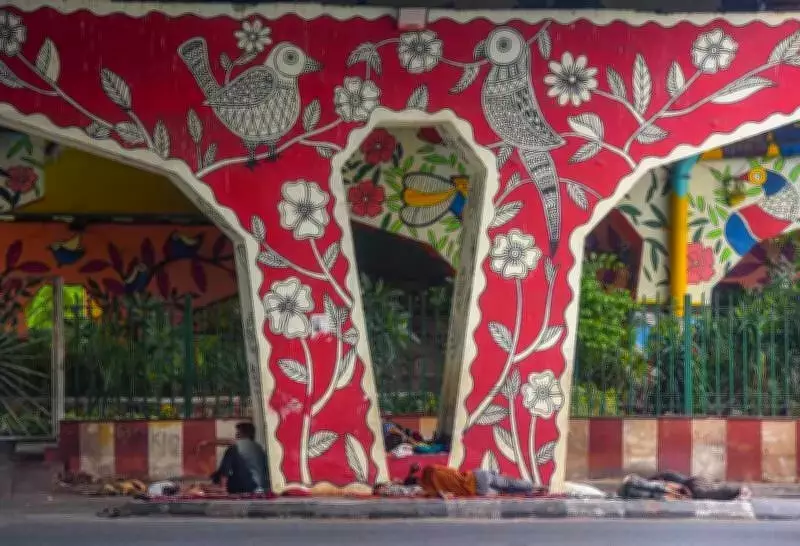
Delhi's Homeless Population Faces Another Round of Displacement for AI Summit
In a move that has become familiar to the city's most vulnerable residents, the homeless population of Delhi is once again being prepared for displacement. This time, the catalyst is the upcoming high-profile AI Impact Summit–2026, scheduled to be held next week. The international event, placing Delhi under the global spotlight, is prompting a coordinated city-wide drive to clear homeless individuals from public spaces.
Summit Details and Official Rationale
The summit is set to take place from February 16 to 20 at the Bharat Mandapam convention center. It will see participation from heads of state, ministers, policymakers, global CEOs, CXOs, and academicians, marking a significant international gathering for the capital just over two years after it hosted the G20 Summit. Authorities have cited sanitation, public safety, and presentability concerns as the primary reasons for the planned displacement operation.
Speaking to media, a civic body official confirmed that joint field inspections had identified a number of homeless persons temporarily residing in key areas, though no specific figures were disclosed. The official emphasized that the drive is a coordinated effort involving multiple agencies.

Key Areas and Routes Targeted for Clearance
The operation will focus on a comprehensive list of major routes and locations across the city. Authorities have identified the following key areas for the clearance exercise:
- Bahadur Shah Zafar Marg
- Bhairon Marg
- Purana Qila Road
- Lala Lajpat Rai Marg
- Mathura Road
- Tilak Marg
- Lodhi Road
- The Oberoi Flyover
- NH-8
- The Airport–Dhaula Kuan Ring Road
- The Ring Road stretch between AIIMS and Dhaula Kuan
In addition to these routes, the plan extends to hotels and accommodation facilities likely to host summit delegates. Establishments such as The Lodhi, India Habitat Centre, Eros Hotel Nehru Place, and The Sheraton Saket have been earmarked for "special attention". Several prominent heritage and tourism sites frequently visited by foreign dignitaries will also be covered, including:
- Rajghat
- Humayun's Tomb
- Nizamuddin Dargah
- Purana Qila
- The Lotus Temple
- Kalkaji Temple
- The Red Fort
Multi-Agency Coordination and Shelter Provisions
The official stated that the Delhi Urban Shelter Improvement Board (Dusib) has received directives to shift homeless persons to nearby shelter homes while "ensuring their safety, dignity and access to basic amenities". The Public Works Department (PWD), as the custodian of flyovers and associated infrastructure, has been tasked with identifying all relevant locations, facilitating shifting operations in coordination with other agencies, and ensuring the cleaning and upkeep of areas afterward.
Delhi Police will provide necessary assistance during the shifting process and work to prevent re-encroachment of the cleared areas. The revenue department has been asked to supervise the exercise through executive magistrates, while the Municipal Corporation of Delhi's (MCD) zonal authorities are responsible for ensuring smooth implementation on the ground.
A Dusib official detailed the arrangements being made at shelter homes, which include provisions for food, bedding, and sanitation facilities. "Three meals a day — breakfast, lunch and dinner — are provided, along with clean bedding and facilities for bathing and shaving as well," the official said.
Persistent Challenges in Homeless Rehabilitation
However, the official highlighted a significant and recurring challenge: many homeless individuals tend to leave shelters after spending the night. "In several cases, they are brought to shelters in buses at night, but by morning many leave on their own. This remains one of the challenges in ensuring sustained rehabilitation," the official admitted, pointing to the temporary and often cyclical nature of such displacement drives.

According to Sunil Kumar Aledia, executive director of the Centre for Holistic Development, homeless persons account for approximately one per cent of Delhi's population. However, the exact number remains uncertain due to the absence of a recent official census. The last ad-hoc survey conducted by Dusib in 2014 estimated there were around 16,760 homeless persons in the city, a figure that is likely outdated but underscores the scale of the issue.
This latest episode of displacement ahead of a major international event raises familiar questions about the long-term solutions for Delhi's homeless population, even as the city prepares to showcase itself on the world stage during the AI Impact Summit 2026.





