

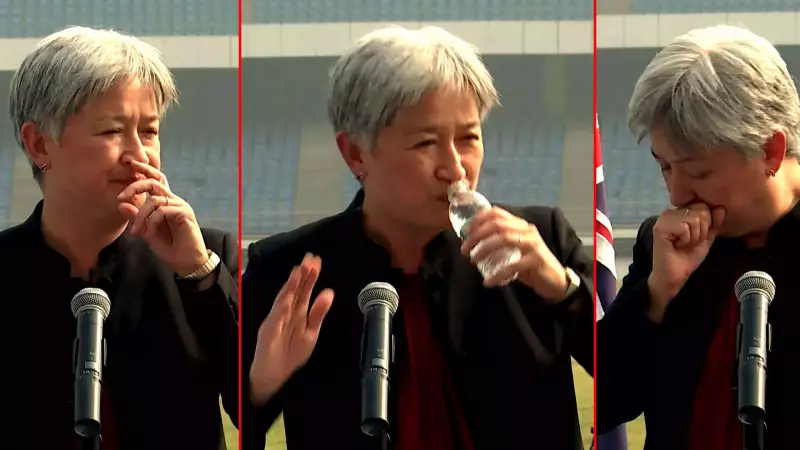
A high-profile diplomatic engagement in India's capital was starkly interrupted by the city's infamous air pollution, forcing Australian Foreign Minister Penny Wong to pause her speech midway after a persistent coughing fit.
Diplomatic Event Overshadowed by Toxic Air
During her remarks at the event, Minister Wong was visibly struggling with the poor air quality. She had to repeatedly stop speaking due to coughing, openly acknowledging the situation by stating, "Obviously I am struggling with the air here." This incident provided a powerful, real-time illustration of the environmental challenges facing Delhi.
Alarming Pollution Levels Across the Region
The minister's physical reaction coincided with dangerously high pollution readings across the National Capital Region. On November 20, 2025, Delhi's overall Air Quality Index (AQI) was recorded at nearly 400, perilously close to the official "severe" category threshold. The situation was even more critical in specific areas.

Wazirpur recorded a hazardous AQI of 477, making it one of the worst-affected zones. Several other key locations also suffered from extremely poor air, with Anand Vihar, Punjabi Bagh, and Jahangirpuri all registering levels above 440. Notably, even Lodhi Road, which is typically considered a cleaner area, found itself in the "poor" air quality category.
The pollution was not confined to Delhi alone. The broader National Capital Region (NCR) was also severely impacted, with neighboring cities Ghaziabad and Noida both slipping into the "severe" air quality bracket. A thick layer of smog had enveloped the entire region for consecutive days, creating hazardous living conditions for millions of residents.
A Global Wake-Up Call and The Path Forward
Penny Wong's moment of distress served as an unplanned but potent global spotlight on the public health emergency that Delhi's inhabitants face annually. The episode transcended a mere diplomatic anecdote, becoming a stark reminder of the human cost of environmental neglect.
This incident has powerfully underlined the critical and urgent need for stronger pollution control measures, enhanced regional cooperation, and the implementation of effective long-term mitigation strategies. It highlights that the air quality crisis is not just a local issue but one with the potential to impact international relations, public health, and the economy, demanding immediate and sustained action from policymakers.






