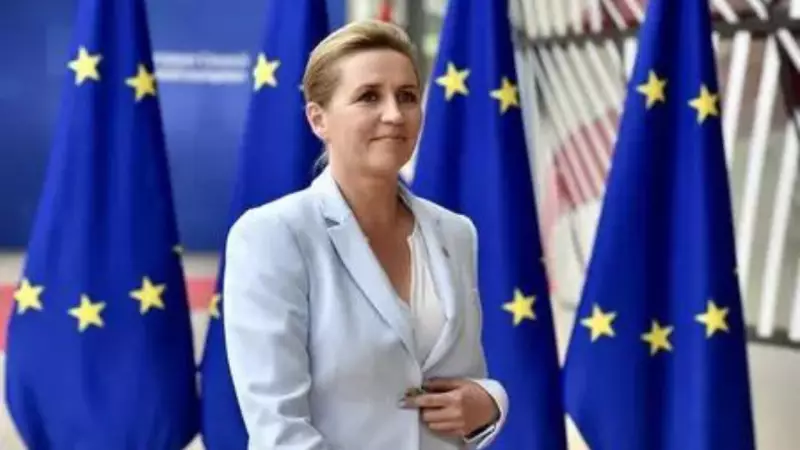
Denmark has asserted that Arctic security represents a collective responsibility for the entire NATO alliance, emphasizing that this critical issue warrants discussion at the highest diplomatic levels. This declaration comes amidst ongoing concerns regarding former US President Donald Trump's historical interest in acquiring Greenland, a Danish autonomous territory.
Denmark's Firm Stance on Sovereignty and Security
Prime Minister Mette Frederiksen articulated Denmark's position clearly, stating, "The security of the Arctic is a matter for the entire NATO alliance." She described it as "good and natural" for NATO Secretary-General Mark Rutte and the US President to engage in dialogues concerning the Arctic region. Frederiksen revealed that Denmark has persistently advocated for increased NATO involvement in the Arctic and maintained close coordination with Greenland's government, Naalakkersuisut, throughout these strategic discussions.
Regular Diplomatic Engagements
The Danish Prime Minister noted her consistent communication with NATO Secretary-General Mark Rutte, particularly surrounding his meeting with President Trump at the World Economic Forum in Davos. She underscored a fundamental principle: "We can negotiate all politically; security, investment, economy. But we can't negotiate our sovereignty." Frederiksen firmly added that decisions pertaining to Danish and Greenlandic territories rest solely with Denmark and Greenland themselves.

While reaffirming this sovereign right, Frederiksen expressed that the Kingdom of Denmark remains open to collaborative dialogue with its allies, including the United States, on enhancing Arctic security. However, she stipulated that any such cooperation must proceed "with respect for our territorial integrity."
NATO's Strategic Focus on the Arctic
In related developments, NATO Secretary-General Mark Rutte addressed the specifics of US-NATO talks concerning Greenland. He indicated that these discussions would concentrate on a primary strategic objective: preventing Russia and China from securing military or economic access to the Danish Arctic territory.
Post-Davos Framework and Alliance Coordination
Rutte's comments followed his diplomatic engagement with President Trump in Davos, after which Trump moderated earlier assertive statements about Greenland, mentioning an agreed "framework" for discussions about the island. Rutte characterized the Davos meeting as "a very good discussion" and outlined that future negotiations would build upon this foundation.
He emphasized that these talks would actively involve NATO allies, with a special focus on the alliance's seven Arctic member states. The concerted goal is to ensure the region remains secure and strategically stable. A key articulated aim is to keep "the Russians and the Chinese out" of the Arctic, highlighting the geopolitical significance NATO attaches to this vast and resource-rich area.
This situation underscores the complex interplay between national sovereignty, alliance responsibilities, and great-power competition in the increasingly accessible and contested Arctic region. Denmark's proactive diplomacy seeks to balance its autonomous rights with collective security imperatives within the NATO framework.