

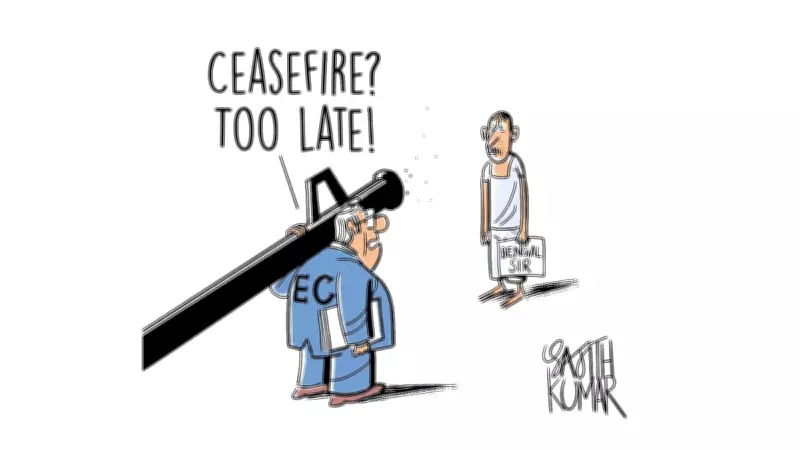
DH Cartoon: Ceasefire Too Late - A Biting Satire on Delayed Peace Initiatives
A recent cartoon published by Deccan Herald has sparked widespread discussion with its sharp critique of ceasefire announcements that come too late in conflicts. The artwork, titled "Ceasefire Too Late," uses visual satire to underscore the tragic irony of peace efforts initiated only after extensive damage and loss have already taken place.
The Core Message of the Cartoon
The cartoon depicts a scene where a ceasefire agreement is being signed or announced, but the background shows a landscape already devastated by war—burned buildings, rubble, and symbolic representations of human suffering. This stark contrast serves as a powerful commentary on the timing of diplomatic interventions in modern conflicts.
Key elements highlighted in the satire include:

- The futility of peace talks that begin after irreversible harm has been inflicted.
- The disconnect between political announcements and ground realities in war zones.
- The human cost of delayed diplomatic efforts, emphasizing that lives lost cannot be reclaimed by belated agreements.
Broader Implications for Conflict Resolution
This cartoon taps into a recurring theme in global politics: the often sluggish response of international bodies and governments to escalating violence. By framing the ceasefire as "too late," the artist critiques not just specific incidents but a systemic issue in how conflicts are managed worldwide.
Observers note that such satirical works play a crucial role in public discourse, using humor and irony to draw attention to serious issues that might otherwise be overlooked in mainstream news coverage. The cartoon encourages viewers to question the effectiveness and timing of peace initiatives, pushing for more proactive and timely interventions.
Reactions and Public Engagement
Since its publication, the cartoon has garnered significant attention on social media and among political commentators. Many have praised its ability to convey a complex message succinctly, while others have used it as a springboard for discussions on specific conflicts where ceasefires were perceived as delayed.
Common points raised in response include:
- The need for early warning systems and preventive diplomacy to avoid reaching a point where ceasefires are "too late."
- The role of media and art in holding policymakers accountable for their timing in conflict resolution.
- Historical examples where belated peace efforts failed to address the root causes or aftermath of violence.
In conclusion, the Deccan Herald cartoon "Ceasefire Too Late" serves as a poignant reminder of the human stakes in diplomatic timing. By blending satire with social commentary, it urges a reevaluation of how and when peace efforts are deployed, advocating for actions that prioritize prevention over post-damage remediation in global conflicts.






