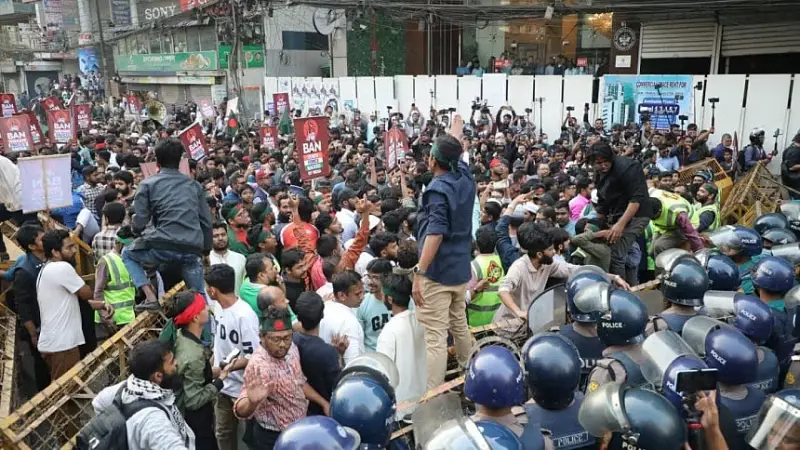
A group of demonstrators in Bangladesh's capital marched towards the Indian High Commission in Dhaka on Sunday, voicing strong opposition to India and its policies. The protest, which saw participants chanting anti-India slogans, was organized in response to ongoing disputes, particularly concerning the sharing of water from the Teesta river.
Details of the Dhaka Protest March
The protesters, who were part of a procession that originated from the Central Shaheed Minar, attempted to move towards the Indian diplomatic mission located in the city's Gulshan area. Their primary grievance centered on India's perceived failure to finalize a long-pending treaty on the equitable sharing of Teesta river waters. This issue has been a persistent point of contention between the two neighboring nations for years.
As the crowd advanced, law enforcement agencies were placed on high alert. Police and paramilitary border guards erected barricades to prevent the demonstrators from reaching the immediate vicinity of the High Commission. The security cordon was robust, ensuring the mission's compound remained secure and inaccessible to the protesting group.

Political Context and Demands
The protest was not an isolated event but part of a broader movement led by certain political and activist groups within Bangladesh. These groups have consistently pressured the Bangladeshi government to take a firmer stance in negotiations with India over the Teesta agreement. The demonstrators accused India of not honoring its commitments and demanded that their government prioritize national interests in the bilateral talks.
Chants and placards during the march reflected deep-seated frustrations, with slogans criticizing Indian foreign policy and its impact on Bangladesh. The organizers stated that such demonstrations would continue until a fair and just water-sharing deal is secured, highlighting the emotional and economic significance of the Teesta river for communities in northern Bangladesh.
Security Response and Diplomatic Implications
Bangladeshi authorities managed the situation proactively to prevent any escalation or breach of diplomatic protocol. The area around the Indian High Commission is typically under tight security, and measures were further intensified in anticipation of the protest. No violence or major untoward incident was reported during the event, thanks to the coordinated efforts of the security forces.
This incident underscores the delicate nature of India-Bangladesh relations, which, while generally cordial and cooperative, face periodic strain from specific unresolved issues like water sharing. Diplomatic channels between Dhaka and New Delhi remain active, with both sides having expressed a commitment to resolving the Teesta matter through dialogue. However, public demonstrations of this nature add pressure to the negotiation process and reflect the complex public sentiment in Bangladesh.
Analysts suggest that while the protest was contained, it serves as a reminder of the need for timely diplomatic resolutions to cross-border resource disputes to maintain the strong bilateral ties that have been cultivated over the past decade.