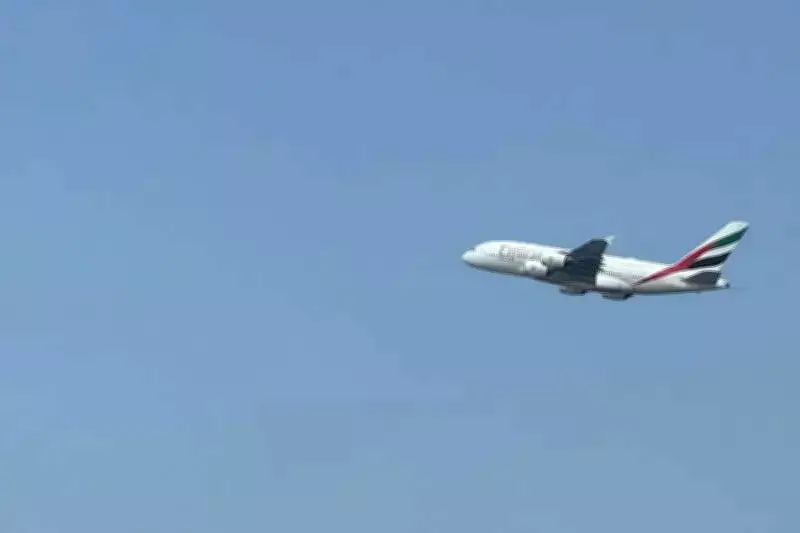
Emirates Flight Temporarily Blocked from Indian Airspace Over Administrative Error
In a significant aviation incident, an Emirates flight operating between the United Arab Emirates and Singapore was briefly denied entry into Indian airspace last Sunday. The disruption occurred due to a critical discrepancy in the flight's documentation, highlighting the stringent protocols governing international air travel over Indian territory.
Flight Plan Confusion Triggers Airspace Denial
The Boeing 777 aircraft, operating as flight EK-9314, was filed with Indian authorities as a non-scheduled flight. However, it lacked the mandatory 'YA number' approval from the Directorate General of Civil Aviation (DGCA) required for all such operations within Indian airspace. This oversight prompted immediate action from air traffic controllers in Mumbai.
"When EK-9314 was about to enter the Indian airspace, alert air traffic controllers in Mumbai realized the flight did not have permission to do so. DGCA has issued a 'YA number' for each approved non-scheduled flight flying to, from and over India. This flight's YA number was nowhere to be found," revealed an official source familiar with the matter.

Resolution Through Clarification and Verification
Following the denial of entry, the aircraft executed a turn and hovered temporarily while the situation was resolved. Emirates promptly intervened, confirming that the flight was, in fact, a scheduled service rather than a non-scheduled one. This clarification was crucial in rectifying the administrative error.
"Emirates later confirmed that the flight was a scheduled one. The pilot also confirmed this. The required clearance was issued and the flight allowed to continue to its destination," the source added. The incident underscores the importance of accurate flight planning and communication between airlines and regulatory bodies.
Implications for Aviation Safety and Procedures
This event serves as a reminder of the robust safety measures enforced by Indian aviation authorities. The DGCA's strict adherence to flight approval protocols ensures that all aircraft operating in Indian airspace comply with established regulations, thereby maintaining security and order in one of the world's busiest air corridors.
While the flight eventually proceeded without further incident after receiving the necessary clearance, the episode highlights potential vulnerabilities in flight documentation processes. It emphasizes the need for airlines to meticulously verify and submit accurate flight plans to avoid similar disruptions in the future.
The Times of India reached out to Emirates for an official comment on the incident, seeking further details on the cause of the flight plan error and any corrective measures being implemented. As of now, no additional statements have been released by the airline regarding this specific occurrence.