

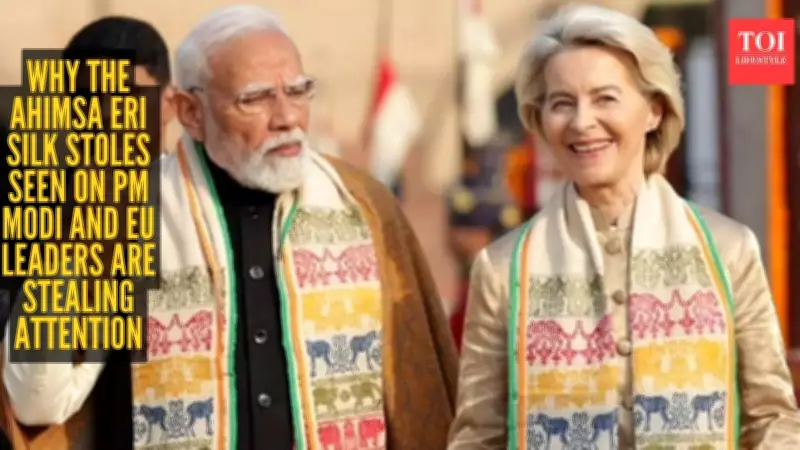
Eri Silk Stoles Steal Spotlight at India-EU Trade Deal Announcement
When Prime Minister Narendra Modi stood beside European Commission President Ursula von der Leyen to announce the landmark India–European Union Free Trade Agreement, the economic significance of the moment was undeniable. However, what truly captured public imagination and sparked conversations across social media platforms was not just the policy details, but the elegant cultural statement made through fashion.
A Republic Day Gift with Profound Significance
The matching stoles draped over both leaders' shoulders were far from a random accessory choice. These exquisite pieces were carefully selected as part of India's Republic Day 2026 invitation extended to Ursula von der der Leyen and European Council President António Costa. This thoughtful gesture served a dual purpose: celebrating the historic trade partnership while simultaneously spotlighting the rich, living craft traditions of India's Northeastern region.
The design specifically honored the Ashtalakshmi states - Arunachal Pradesh, Assam, Manipur, Meghalaya, Mizoram, Nagaland, Tripura, and Sikkim - paying tribute to the skilled artisans who preserve these cultural heritage practices. During the 77th Republic Day celebrations, numerous ministers and visiting dignitaries were observed wearing identical stoles, subtly reinforcing that India's contemporary global identity encompasses not just economic power and policy sophistication, but also deep cultural richness and artisanal excellence.

The Unique Qualities of Eri Silk
Eri silk represents a distinct category within the silk family. Unlike conventional glossy silks, Eri possesses a softer texture, superior warmth, and a more grounded aesthetic. This remarkable fabric carries a prestigious Geographical Indication (GI) tag and is frequently described as "Ahimsa silk" due to its ethical production process where no silkworms are harmed during harvesting.
The manufacturing technique allows the moth to emerge naturally before the cocoon is spun into yarn, establishing Eri as one of the world's most ethically produced silks. Traditionally nurtured by indigenous communities, particularly the Khasi people of Meghalaya, the entire spinning and weaving process remains predominantly manual, often conducted within household settings and passed through generations as cherished knowledge.
Why Eri Silk Earns the Title 'Wool of Silks'
What genuinely distinguishes Eri silk is its exceptional wearability and practical qualities. The fabric provides warmth without heaviness and offers excellent breathability even in moderate weather conditions. Its soft yet sturdy composition, combined with remarkable comfort, makes it suitable for year-round use - characteristics that have earned it the affectionate nickname "wool of silks."
Eri silk products, including stoles, shawls, and garments, are renowned for their durability, often lasting decades with proper care. Beyond traditional stoles and gamosas, this versatile material finds expression in sarees, scarves, dresses, sweaters, and blankets - items designed for regular use and emotional connection rather than mere display. Additionally, its natural hypoallergenic properties make it particularly appealing for individuals with sensitive skin, an increasingly valued attribute in contemporary conscious consumption.
Cultural Diplomacy Through Sustainable Fashion
In an era dominated by fast fashion and rapidly changing trends, the deliberate selection of Eri silk for such a prominent diplomatic occasion communicates a powerful, albeit subtle, message. This choice speaks volumes about sustainability priorities, ethical production values, and profound respect for regional craftsmanship - effectively positioning India's Northeastern cultural heritage at the forefront of global engagement.

The stoles worn by Prime Minister Modi and European Union leaders transcended mere fashion accessories. They represented something substantially deeper: a fabric that embodies life-affirming values, honors centuries-old traditions, and seamlessly carries India's multifaceted cultural narrative into international dialogues without requiring verbal explanation. This moment exemplified how cultural elements can complement and enhance diplomatic and economic partnerships, creating more meaningful connections between nations and peoples.





