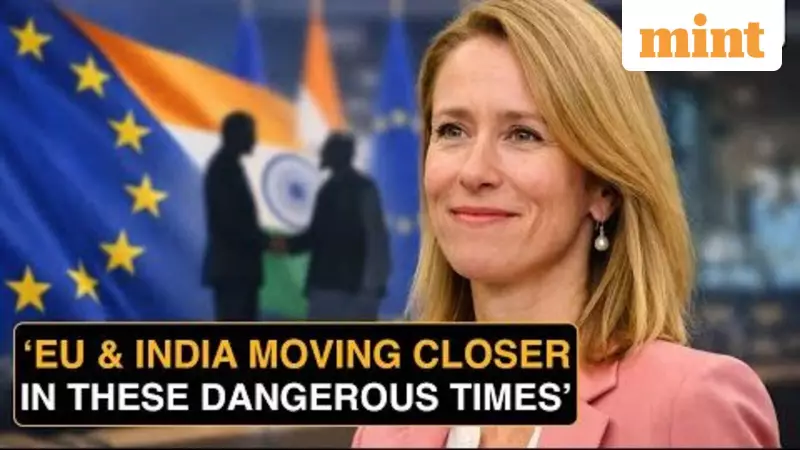
A senior European Union official has made a significant declaration, stating that India is 'indispensable' in the current global landscape and has laid out a 'powerful new agenda' aimed at resisting coercion on the international stage. This announcement comes as the European Union and India are poised for a major strategic reset, with leaders from both sides preparing for a high-stakes summit scheduled to take place in New Delhi.
Strategic Reset Amid Global Challenges
With global rules facing immense strain due to ongoing wars, increasing coercion, and economic fragmentation, Brussels and New Delhi are actively pushing for closer cooperation across multiple critical domains. The upcoming summit is set to be a pivotal moment in EU-India relations, reflecting a shared commitment to addressing these pressing global challenges through enhanced collaboration.
Key Areas of Cooperation
The summit is expected to advance discussions on several key fronts, including:

- Free Trade Agreement: Progress on the long-pending EU-India free trade agreement, which aims to boost economic ties and reduce trade barriers between the two major economies.
- Supply Chain Resilience: Strengthening supply chains in key sectors to ensure stability and reduce vulnerabilities in the face of global disruptions.
- Security and Defence: Deepening coordination on security and defence matters, enhancing mutual efforts to maintain regional and global stability.
Shared Roadmap Toward 2030
Leaders from both the European Union and India will also outline a shared roadmap leading up to 2030, signaling a more ambitious and forward-looking partnership. This roadmap is designed to foster a stronger alliance between two of the world's largest democracies, emphasizing values such as rule of law, human rights, and democratic governance in their joint initiatives.
The emphasis on resisting coercion highlights a proactive stance against external pressures that threaten international norms. By positioning India as an 'indispensable' partner, the EU underscores the critical role New Delhi plays in shaping a multipolar world order and countering authoritarian influences.
This strategic alignment is not just about economic or security interests; it represents a broader vision for sustainable development and global cooperation. As both entities navigate complex geopolitical dynamics, their strengthened partnership could serve as a model for democratic collaboration in an increasingly fragmented world.