

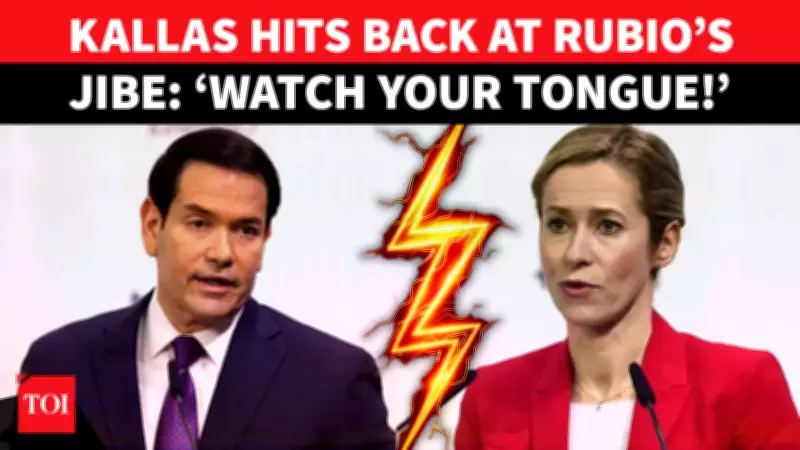
EU's Kallas Publicly Rejects US Claims of 'Civilizational Erasure' at Munich Summit
In a dramatic confrontation at the Munich Security Conference, EU foreign policy chief Kaja Kallas has forcefully pushed back against assertions from the United States that Europe is facing "civilizational erasure." Her remarks came as a direct response to criticisms outlined in the Trump administration's national security strategy, highlighting a deepening rift in transatlantic relations.
Kallas Dismisses 'European-Bashing' Narratives
Speaking at the high-profile international forum, Kallas categorically dismissed accusations that Europe is weakened by factors such as immigration, declining birth rates, or liberal free speech policies. She labeled these narratives as "European-bashing," emphasizing that such claims are unfounded and detrimental to the longstanding alliance between the European Union and the United States.
"We must stand firm against these baseless allegations," Kallas stated, underscoring Europe's resilience and commitment to its core values. Her speech aimed to counter what she perceives as a mischaracterization of European societal challenges, arguing that the continent remains strong and united in the face of global pressures.

US Secretary of State Rubio Reaffirms Firm Stances
The clash unfolded after U.S. Secretary of State Marco Rubio reaffirmed Washington's intent to reshape the transatlantic alliance. Rubio maintained firm positions on key issues including migration, trade, and climate policies, signaling a potential shift in U.S. foreign policy under the current administration. His comments at the conference underscored a more assertive American approach, which has sparked concerns among European leaders about the future of bilateral cooperation.
"Our values are non-negotiable, and we will continue to advocate for policies that reflect our national interests," Rubio asserted, highlighting the administration's determination to prioritize U.S. priorities in international engagements.
Simmering Tensions and Core Values at Stake
As tensions simmer between the two global powers, both sides have insisted they will stand by their core values, setting the stage for ongoing diplomatic friction. The Munich Security Conference, a key venue for geopolitical dialogue, has become a flashpoint for these disagreements, with observers noting the potential implications for global stability and alliance dynamics.
The exchange between Kallas and Rubio reflects broader geopolitical shifts, as Europe and the United States navigate divergent views on issues ranging from security to economic policy. Despite the heated rhetoric, officials from both regions have expressed a desire to maintain constructive dialogue, though the path forward remains uncertain amid these public disputes.
This incident underscores the evolving nature of transatlantic relations, with implications for international cooperation on challenges such as climate change, trade agreements, and migration management. As the world watches, the outcome of these tensions could reshape global alliances in the coming years.






