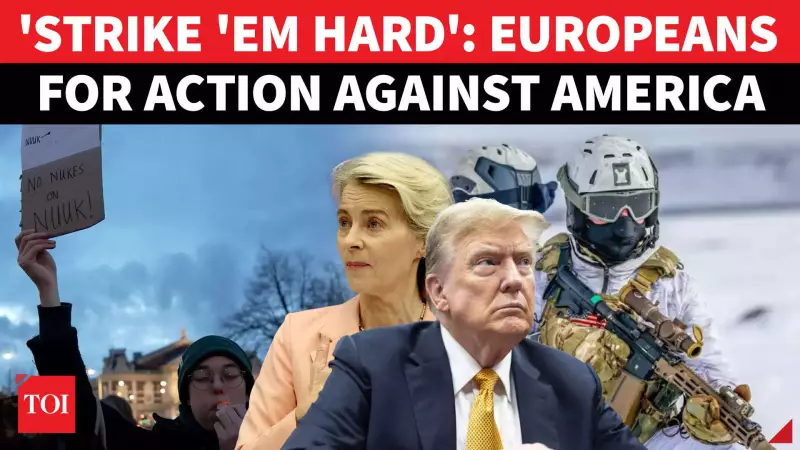
Protests erupted outside the U.S. consulate in Amsterdam on Friday. Demonstrators urged the European Union to take a firm stand against U.S. pressure over Greenland. Rallygoers accused Washington of neo-colonial ambitions. They called on the EU to use economic leverage, not military symbolism, to defend Greenland's right to self-determination.
Trump's Tariff Threats Escalate Tensions
The protests come as President Donald Trump suggested he could impose tariffs on countries that refuse to support U.S. control of the Arctic island. This move has sparked outrage across Europe. Many see it as an aggressive attempt to dominate Greenland's strategic resources.
NATO Deployments and Diplomatic Failures
With NATO deployments increasing in the region, diplomatic talks are failing to bridge differences. Greenland is fast becoming a major geopolitical flashpoint between Europe and Washington. The situation highlights growing divisions within the Western alliance.

European Demands for Economic Action
Protesters in Amsterdam emphasized the need for concrete economic measures. They argued that symbolic military gestures would not suffice. Instead, they demanded the EU leverage its trade power to counter U.S. pressure.
Background of the Greenland Dispute
Greenland, an autonomous territory of Denmark, holds significant strategic importance in the Arctic. Its vast natural resources and shipping routes have attracted global interest. The U.S. has long sought greater influence over the island, citing security concerns.
Recent moves by the Trump administration have intensified these efforts. European leaders, however, remain committed to supporting Greenland's autonomy. They view U.S. actions as undermining regional stability.
Implications for International Relations
The standoff over Greenland could reshape international alliances. It tests the cohesion of NATO and the EU's ability to act collectively. Observers warn that prolonged tensions may lead to broader economic and political repercussions.
As protests continue, the world watches closely. The outcome of this dispute will likely influence Arctic governance and global power dynamics for years to come.