

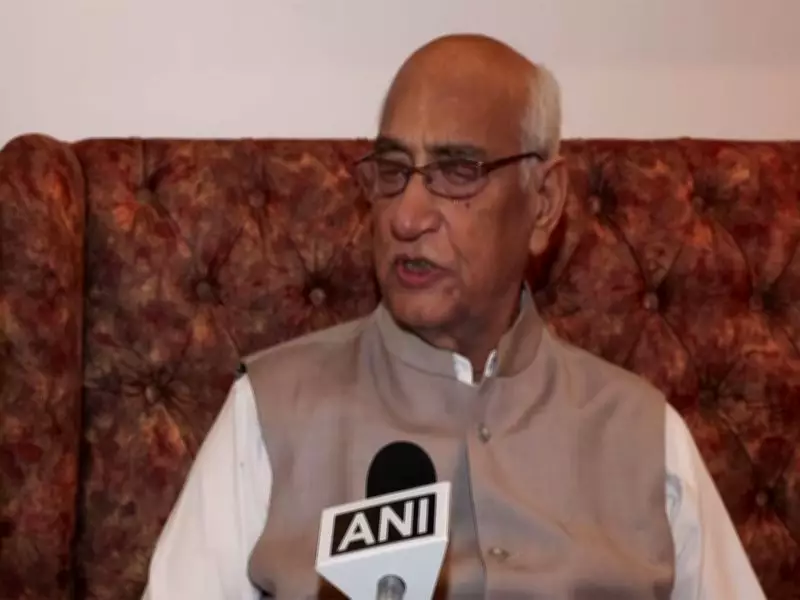
Former Diplomat Vidya Bhushan Soni Dismisses Pakistan's Mediator Claims, Labels Islamabad a 'Post Office' in US-Iran Talks
In a sharp critique of Pakistan's diplomatic assertions, former diplomat Vidya Bhushan Soni has outright dismissed Islamabad's claims of acting as a mediator in talks between the United States and Iran. Soni, leveraging his extensive experience in international relations, labeled Pakistan's role as merely that of a 'post office,' a term that underscores his skepticism about the country's capacity and credibility in such high-stakes negotiations.
Questioning Pakistan's Diplomatic Credibility
Soni's comments come amid ongoing tensions in the Middle East, where Pakistan has occasionally positioned itself as a potential bridge between Washington and Tehran. However, he argued that Islamabad lacks the necessary diplomatic heft and impartiality to effectively mediate between these two global powers. 'Pakistan's internal political instability and its historical alignments make it an unlikely candidate for such a sensitive role,' Soni stated, emphasizing that true mediation requires a neutral stance, which he believes Pakistan cannot maintain.
He further elaborated that Pakistan's involvement might be more about gaining geopolitical leverage rather than genuinely facilitating dialogue. 'Calling itself a mediator is a stretch; it's more accurate to describe it as a post office—simply passing messages without adding substantive value,' Soni remarked, highlighting what he sees as a superficial engagement in the complex US-Iran dynamics.

Implications for Regional Diplomacy
Soni's dismissal raises important questions about the broader landscape of diplomacy in South Asia and the Middle East. By challenging Pakistan's claims, he indirectly underscores the need for more credible intermediaries in resolving international conflicts. His perspective suggests that countries with a proven track record of neutrality and diplomatic success are better suited for such roles.
This critique also touches on the ongoing challenges in US-Iran relations, where mediation efforts have often faltered due to mistrust and geopolitical rivalries. Soni's analysis implies that involving a party like Pakistan could complicate matters further, rather than easing tensions. 'Effective diplomacy requires trust and consistency, qualities that are in short supply in this context,' he added, pointing to the delicate balance needed in such negotiations.
Background and Expert Insights
Vidya Bhushan Soni, a seasoned diplomat with years of service in India's foreign ministry, brings a wealth of knowledge to his assessment. His comments are rooted in a deep understanding of regional politics and international relations, making his critique particularly noteworthy. Soni has previously been vocal about issues affecting South Asian diplomacy, and his latest remarks align with his consistent advocacy for transparent and effective foreign policy.
In response to Soni's statements, analysts have noted that Pakistan's attempts to position itself as a mediator are part of a broader strategy to enhance its global standing. However, as Soni argues, this may be undermined by its domestic issues and perceived biases. 'Diplomatic credibility is earned through actions, not just claims,' he concluded, urging a more realistic appraisal of Pakistan's role in international affairs.
Overall, Soni's dismissal of Pakistan's mediator claims serves as a reminder of the complexities involved in global diplomacy and the importance of credible actors in fostering peace and stability.






