

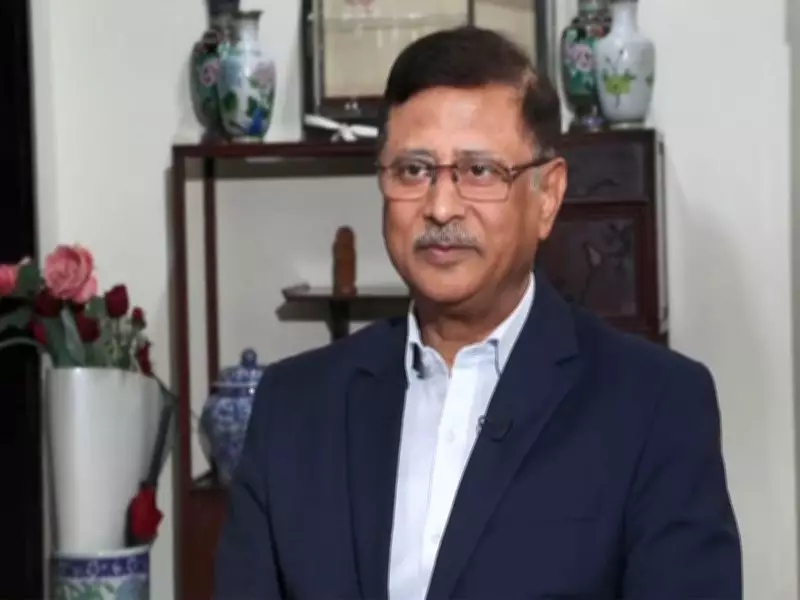
Former Envoy Sanjay Verma Advocates for Pragmatic Canada-India Collaboration
Former Indian High Commissioner to Canada, Sanjay Kumar Verma, has underscored the imperative for New Delhi and Ottawa to forge a collaborative path forward, emphasising that the two nations must transcend previous diplomatic strains. In an interview with ANI, Verma articulated that the current phase marks a transition towards a more functional and pragmatic partnership, driven by a recognition of mutual dependency.
Diplomatic Pragmatism Over Vindication
Verma refrained from labelling the recent developments as vindication, instead framing them as an exercise in diplomatic pragmatism. "I wouldn't go ahead and call it vindication, but I would say it is diplomatic pragmatism. Because, finally, the realisation is that Canada-India have to work together. There is no other option," he stated. He elaborated that while disagreements may arise, the focus should be on advancing convergences and engaging in constructive dialogue over contentious issues, rather than resorting to public recriminations.
Analysis of RCMP Findings and Allegations
The former envoy addressed the recent conclusions by Canadian law enforcement, which have delineated between the legal proceedings concerning the death of Khalistani separatist Hardeep Singh Nijjar and broader allegations of state-sponsored interference. Verma noted that the Royal Canadian Mounted Police (RCMP) has categorised these into two distinct buckets: one involving the court case against four Indian nationals charged in Nijjar's death, and another pertaining to claims of transnational repression and crimes.

Regarding the first bucket, Verma highlighted that the trial is ongoing, with charges filed against individuals who entered Canada as international students. On the second category, he expressed satisfaction that the narrative implicating the Indian state has not been substantiated. "I am very glad to see the statement which came out, and what he said was that right now he doesn't see any link with any foreign entity, which includes India, I'm sure, any foreign entity having links with transnational crimes and transnational repression in Canada," Verma remarked.
Criticism of Previous Canadian Administration
Verma levied criticism at the handling of the situation by the former Canadian government under Prime Minister Justin Trudeau, suggesting that the allegations were rooted in domestic political interests. "We always said that this is politically motivated. We always said that this is vote-bank politics. We always said that there is no evidence available to say so," he asserted. He questioned the lack of formal legal action despite claims of credible evidence, pointing out that if such evidence existed, charges should have been filed promptly.
Attributing the diplomatic fallout to poor counsel and political timing, Verma stated, "I would say he was ill-advised. The timing was of his choosing, but he was ill-advised to put a very strong bilateral relationship on hold and move ahead with his political motives." He emphasised that the responsibility ultimately rested with the former Prime Minister, as the leader who articulated these allegations in Parliament.
Impact of the Diplomatic Rift and Path to Recovery
Verma detailed the significant repercussions of the bilateral strain, noting that the relationship was "hugely" affected. Key initiatives, such as the Early Progress Trade Agreement (EPTA) and high-level visits, were suspended, resulting in a loss of two years of productive engagement. Additionally, he lamented the emotional toll on Indian diplomats, who faced reputational damage and were perceived negatively by the Canadian public.

Despite these challenges, Verma expressed optimism following the recent visit of Canadian Prime Minister Mark Carney to India. He observed that Carney has adeptly navigated the situation by maintaining the ongoing court case while simultaneously advancing other aspects of the bilateral relationship. "Thankfully, the present Prime Minister of Canada, Prime Minister Carney, has been able to see through it. And what he has done is he has not taken off the case from the court, which is going on. So that is still there. But he has moved ahead with other relationships with India, and he had a very successful visit to India, as I see," Verma concluded.
Key Takeaways for Future Engagement
- Mutual Dependency: Both nations must acknowledge their interdependence and work collaboratively.
- Diplomatic Pragmatism: Focus on areas of convergence while addressing disagreements through dialogue.
- Evidence-Based Approach: Allegations should be substantiated with concrete evidence before public escalation.
- Leadership Responsibility: Political leaders bear the onus for maintaining stable bilateral relations.
- Emotional and Reputational Repair: Efforts are needed to mend the personal and professional damages incurred during the rift.
In summary, Sanjay Verma's insights highlight a critical juncture for Canada-India relations, advocating for a pragmatic and forward-looking approach that prioritises cooperation over conflict, thereby fostering a resilient and mutually beneficial partnership.





