

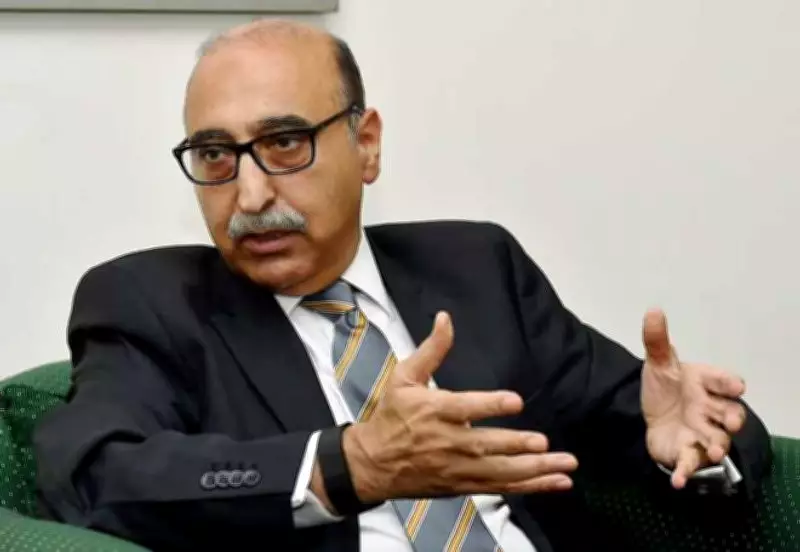
Former Pakistani Diplomat's Provocative Remarks Ignite Outrage
In a recent television debate that has sent shockwaves across the region, former Pakistani envoy Abdul Basit made alarming statements suggesting that Pakistan would target Indian cities like Mumbai and New Delhi in the event of a US attack on Pakistan. The remarks, delivered on the Pakistani news channel 'ABN News', have sparked widespread condemnation and heightened concerns over escalating rhetoric in South Asia.
Basit's Controversial Comments on Regional Strategy
Abdul Basit, who served as Pakistan's High Commissioner to India from 2014 to 2017, asserted during the debate that if the United States were to attack Pakistan due to the ongoing West Asia conflict, India would become the immediate and primary target. He explicitly mentioned that bombing major Indian urban centers would be Pakistan's only recourse in such a scenario, disregarding the catastrophic consequences that could follow.
"The consequences of striking Indian cities could be dealt with later," Basit was quoted as saying, emphasizing a stance that prioritizes aggressive retaliation over diplomatic resolution. His comments have been criticized for their reckless tone, with many observers warning that such narratives could severely strain the already fragile Indo-Pakistani relations and undermine peace efforts in the region.

Reactions and Concerns Over Escalating Tensions
The statements have triggered a wave of outrage, particularly on social media platforms, where users have labeled the remarks as "crazy" and dangerous. One viral post on X (formerly Twitter) summarized the sentiment, quoting Basit as saying, "If America attacks Pakistan, we'll nuke India," highlighting the extreme nature of the threat. This has raised alarms about the potential for nuclear escalation and the broader geopolitical risks in South Asia.
Experts and analysts have expressed deep concern over the implications of such rhetoric, noting that it comes at a time when the West Asia conflict is already fueling global tensions. The provocative language used by a former diplomat, who once held a key role in bilateral relations, is seen as a significant setback to diplomatic initiatives aimed at fostering stability between the two nuclear-armed neighbors.
Background and Regional Context
Abdul Basit's tenure in New Delhi was marked by efforts to navigate complex diplomatic waters, making his recent comments all the more surprising and contentious. The ongoing West Asia conflict, involving multiple international actors, has added a layer of urgency to regional security discussions, with fears that spillover effects could destabilize South Asia.
In response to the controversy, there have been calls for restraint and dialogue to prevent further deterioration of ties. The incident underscores the volatile nature of Indo-Pakistani relations and the need for responsible communication from all sides to avoid unintended escalations.
As the situation develops, stakeholders are closely monitoring the fallout, with many hoping that cooler heads will prevail to de-escalate tensions and refocus on peaceful coexistence in the region.






