

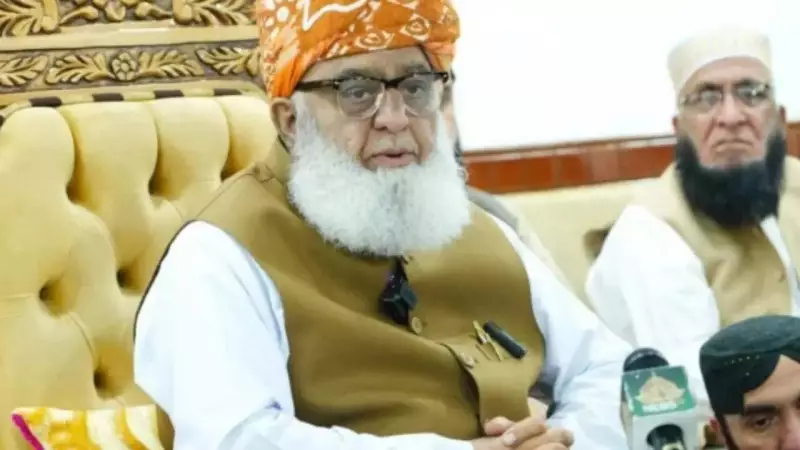
In a significant statement that questions the foundation of Pakistan's security policy, Maulana Fazlur Rehman, the chief of the Jamiat Ulema-e-Islam (F) party, has argued that Pakistan loses the moral ground to object to Indian actions if it conducts operations inside Afghanistan. The senior cleric-politician made these remarks while speaking to journalists on Monday, sparking a debate on regional diplomacy and internal power structures.
A Question of Hypocrisy in Foreign Policy
Fazlur Rehman directly challenged the logic behind Pakistan's stance on cross-border actions. He posed a pointed question to the country's establishment: if Pakistan justifies entering Afghan territory to target its enemies, then on what basis does it protest when India claims to target its adversaries within Pakistan, specifically mentioning locations like Bahawalpur and Muridke? This analogy draws a stark parallel between the two neighbours' alleged security doctrines.
He emphasized that the current path of escalating tensions is unsustainable and dangerous. "Continued tensions between the two neighbours would only destabilise the region," Rehman cautioned. For him, the only viable path forward is through sustained dialogue and political engagement, not military posturing or covert operations.

Internal Critique: Power Belongs to People, Not Army
Moving beyond foreign policy, the JUI-F leader launched a sharp critique of Pakistan's domestic power dynamics, as reported by The Express Tribune. He asserted that ultimate political authority must reside with the nation's citizens and their elected representatives, not with the armed forces. "Political strength is not the right of defence institutions; it belongs to the people and politicians," Rehman declared.
He linked national development directly to the rule of law and institutional balance. "National progress depended on constitutional supremacy, not the dominance of one institution over others," he stated, implicitly criticizing the military's historical influence over Pakistan's governance. In a related foreign policy stance, he also voiced opposition to the potential deployment of Pakistani troops to Palestine.
Re-evaluating Pakistan's Afghan Policy
Reflecting on the fraught relationship with Afghanistan, Fazlur Rehman offered a historical perspective that places blame on Islamabad's own strategic failures. He noted that no government in Kabul, from the era of King Zahir Shah to the recent administration of Ashraf Ghani, had maintained genuinely friendly ties with Pakistan.
This consistent hostility, he suggested, should prompt serious introspection within Pakistan instead of solely blaming Afghanistan. "Blaming Afghanistan alone would not help," he said, calling for an honest and critical internal debate about the country's diplomatic approach towards its western neighbour. His comments underscore a rare public admission from a Pakistani political figure about potential flaws in the state's long-standing Afghan policy.
The statements by Maulana Fazlur Rehman, a key figure in Pakistan's political and religious landscape, highlight deepening concerns about regional stability and internal governance. By challenging the rationale for cross-border actions and the military's role in politics, he has ignited conversations on topics often considered off-limits, pointing towards a need for comprehensive policy reassessment.






