France Announces Major Nuclear Strategy Shift with Allied Deployments
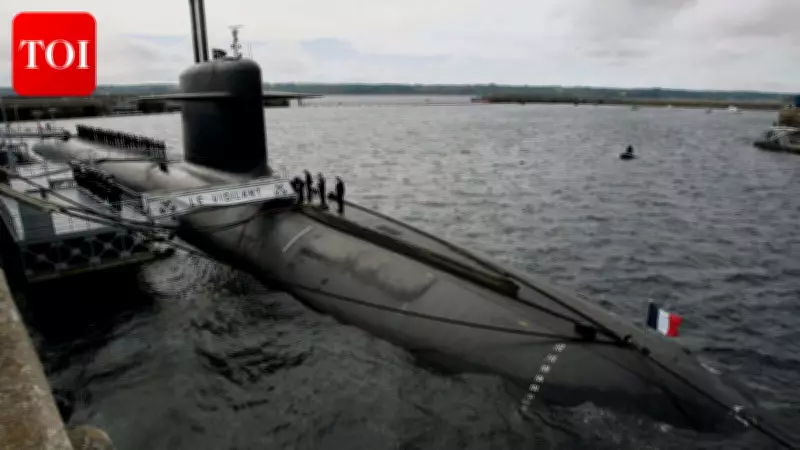
In a significant development for European security, French President Emmanuel Macron has unveiled a new nuclear posture that includes the temporary deployment of France's nuclear-armed aircraft to allied nations. The announcement came during a speech at the L'Ile Longue military base in northwestern France, home to the country's ballistic missile submarines.
Strategic Air Force Deployments to Allied Territories
President Macron confirmed that France would allow "the temporary deployment of elements of our strategic air forces to allied countries" as part of this revised nuclear strategy. However, he emphasized that decision-making authority regarding the actual use of nuclear weapons would remain exclusively with France, with no sharing of this critical responsibility with partner nations.
Discussions about such deployment arrangements have already commenced with several European allies, including Britain, Germany, Poland, the Netherlands, Belgium, Greece, Sweden, and Denmark. This initiative represents a substantial shift in France's nuclear policy and its role in European defense architecture.

First Nuclear Arsenal Expansion in Decades
In addition to the deployment plans, Macron announced France would increase its number of nuclear warheads from the current level of below 300. While he did not specify the exact figure for this increase, this marks the first time France has expanded its nuclear arsenal since at least 1992, ending a prolonged period of nuclear stockpile stability.
"My responsibility is to ensure that our deterrence maintains - and will maintain in the future - its assured destructive power," Macron declared at the military base. He further asserted, "If we had to use our arsenal, no state, however powerful, could shield itself from it, and no state, however vast, would recover from it."
European Security Context and Nuclear Umbrella Concerns
The French president's announcement comes amid growing European apprehensions about security commitments, particularly concerns raised by recurring tensions with U.S. President Donald Trump. European leaders have expressed increasing doubts about American guarantees to defend Europe under the traditional nuclear umbrella policy, which has long promised NATO members protection by U.S. nuclear forces in case of threats.
As the only nuclear power within the European Union, France's strategic decisions carry particular weight. Macron's speech specifically addressed how French nuclear weapons fit into Europe's evolving security landscape, with the continent seeking greater strategic autonomy.
European Nuclear Cooperation Developments
Several European nations have already engaged with France on nuclear deterrence discussions following an offer Macron extended last year. Some partners have even participated in nuclear exercises alongside France, indicating growing European collaboration in this sensitive domain.
- German Chancellor Friedrich Merz recently revealed "initial talks" with Macron on nuclear matters and publicly speculated about the potential for German Air Force planes to carry French nuclear bombs.
- France and Britain adopted a joint declaration in July enabling coordination between their independent nuclear forces, despite the UK no longer being an EU member.
- The United Kingdom remains the only other European nation with a nuclear deterrent, making Franco-British cooperation particularly significant for continental security.
Throughout these developments, Macron has consistently maintained that any decision to deploy France's nuclear weapons would remain solely with the French president, preserving national sovereignty over this ultimate security instrument while expanding cooperative arrangements with European allies.