

France and United Kingdom Announce Joint Leadership of Multinational Strait of Hormuz Security Initiative
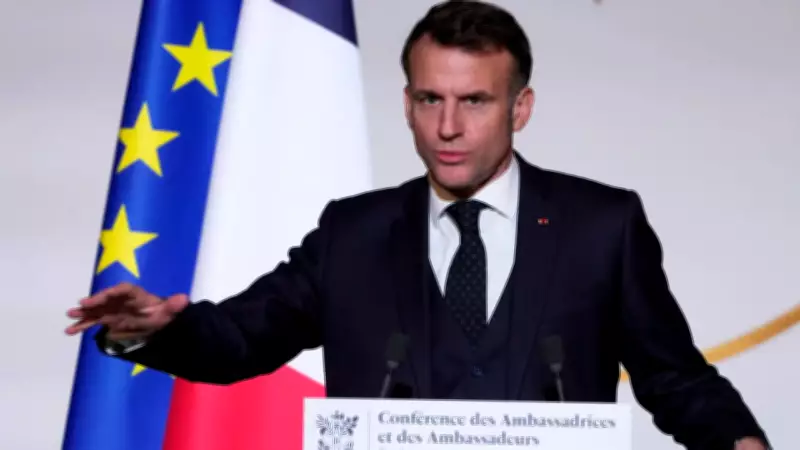
In a significant diplomatic development, French President Emmanuel Macron declared on Monday that France and the United Kingdom will jointly spearhead a multinational initiative aimed at restoring free and secure navigation through the strategically vital Strait of Hormuz. This announcement comes as geopolitical tensions escalate dramatically over control of this crucial waterway, primarily between the United States and Iran.
Background: US Maritime Restrictions and Iranian Response
The French-British initiative emerges against a backdrop of increasing friction following recent actions by the United States Central Command (CENTCOM). CENTCOM has moved to implement stringent restrictions on maritime traffic associated with Iranian ports throughout the Persian Gulf and the Gulf of Oman. These measures, enacted under a directive from US President Donald Trump, apply universally to vessels of all nationalities operating to and from Iranian ports.
CENTCOM officials clarified that while port activity linked to Iran is being targeted, the fundamental freedom of navigation through the Strait of Hormuz for vessels transiting between non-Iranian ports remains unaffected and protected under international law.

In a swift and firm response, Iranian authorities have strongly condemned the US restrictions. Tehran issued warnings that maritime security throughout the Persian Gulf and the Sea of Oman could be severely compromised if Iran's security interests are threatened. Iranian officials further asserted their continued enforcement of control over access to the Strait of Hormuz, maintaining they will permit passage according to their regulations while restricting vessels connected to what they term "hostile entities."
Macron's Announcement: A Defensive Diplomatic Mission
Addressing these mounting tensions, President Macron positioned the proposed Franco-British initiative as an integral component of broader diplomatic efforts to de-escalate Middle Eastern conflicts and ensure long-term regional stability. He emphasized that the mission would be "strictly defensive" in nature and deliberately separate from any parties currently engaged in active hostilities.
"Regarding the Strait of Hormuz, we will organise with the United Kingdom, in the coming days, a conference with countries ready to contribute alongside us to a peaceful multinational mission aimed at restoring freedom of navigation in the strait," Macron stated. "This strictly defensive mission, distinct from the belligerents, will be deployed as soon as the situation allows."
Macron revealed that France and the UK will convene this critical conference within days, bringing together nations willing to contribute resources and support to what he described as a "peaceful multinational mission" dedicated to safeguarding maritime traffic through this essential global energy route.
Broader Regional Context and French Commitment
The French President contextualized the maritime security initiative within wider regional concerns, explicitly mentioning Iran's nuclear and ballistic missile activities alongside what he characterized as destabilizing actions in the area. This announcement follows a fragile two-week ceasefire between US-Israel coalition forces and Iran, established after more than a month of intense conflict.
Macron further connected the Strait of Hormuz effort to a comprehensive diplomatic push across West Asia. He highlighted parallel objectives, including restoring stability in Lebanon while fully respecting that nation's sovereignty and territorial integrity.
Reaffirming France's dedication, Macron declared that France stands ready to play a "full part" in the initiative, with deployment of the multinational mission contingent upon appropriate conditions being met. This joint leadership role underscores Europe's proactive engagement in Middle Eastern security matters, offering a potential pathway to reduce reliance on unilateral actions and foster cooperative international solutions to complex geopolitical challenges.






