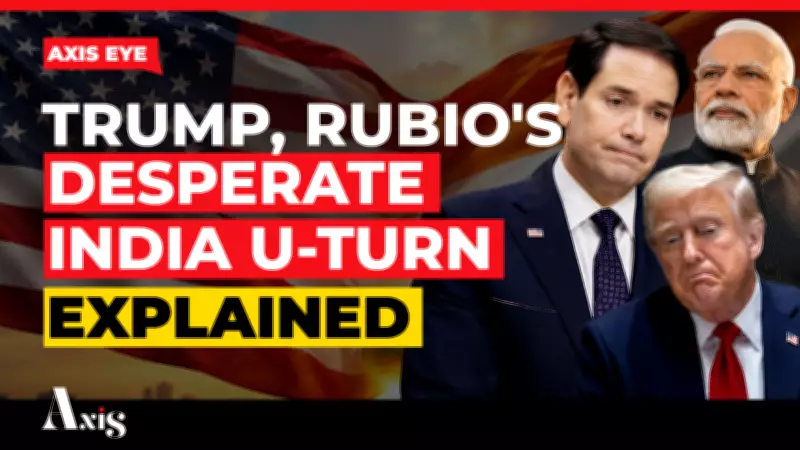
The recent visit of United States Secretary of State Marco Rubio to India may have revealed more than just diplomatic niceties; it underscores a growing anxiety within Washington about losing strategic trust with New Delhi. For months, the US had exerted pressure on India regarding its purchase of Russian oil, tightened immigration norms, escalated tariff disputes, and tolerated anti-India rhetoric on online platforms. However, a sudden shift in tone has been observed, with American officials sounding more conciliatory, cautious, and almost apologetic.
Rubio's Tough Questions in Delhi
During his visit, Rubio faced difficult questions from Indian officials and media regarding issues of racism, immigration policies, and anti-India remarks linked to former President Donald Trump's own rhetoric. The discussions highlighted the growing disconnect between the two nations on key bilateral issues.
Trump's Surprise Praise
In a surprising turn, Donald Trump himself made a public intervention praising India and Prime Minister Narendra Modi. This move, analysts believe, was not a coincidence but a calculated step to mend frayed ties. The timing is crucial as the QUAD summit approaches, and the United States recognizes that its Indo-Pacific strategy cannot succeed without India's active participation.

India's Firm Stance: 'India First'
India, however, is no longer treating the United States as an unquestioned partner. The message from New Delhi is clear: 'India First.' This assertive posture is forcing Washington into a diplomatic recalibration mode. India's growing strategic autonomy and its balancing act between major powers have become more pronounced.
The China Factor
The rise of China's influence in the region has added urgency to the US efforts. With Beijing becoming stronger economically and militarily, the US sees India as an indispensable partner in the Indo-Pacific. The QUAD framework, which includes the US, India, Japan, and Australia, is central to countering China's assertiveness.
Implications for Bilateral Relations
The shift in US rhetoric reflects a broader recognition that India's strategic importance cannot be taken for granted. Washington's earlier hardline stance on issues like oil imports and trade has given way to a more pragmatic approach. However, India's insistence on sovereignty and non-alignment means that future cooperation will be based on mutual respect and shared interests rather than unilateral expectations.
As both nations navigate this complex relationship, the upcoming QUAD summit will be a critical test of whether the US can successfully rebuild trust with India. The outcome will have significant implications for the regional balance of power and the future of the Indo-Pacific.