

Gadkari Reveals Sanskrit-Persian Linguistic Link During Iran Interactions
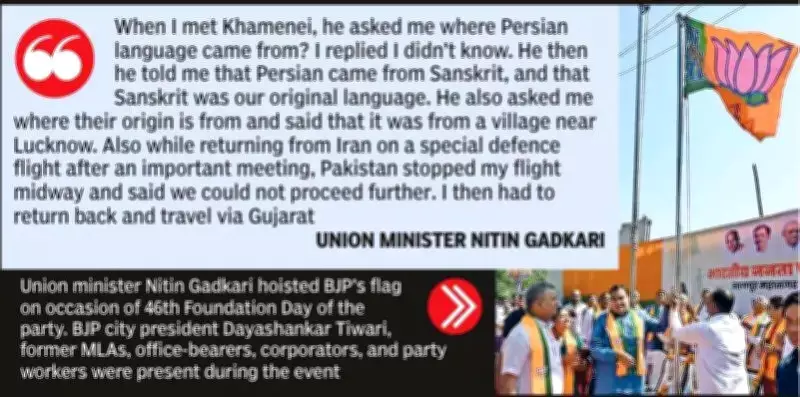
Union Minister Nitin Gadkari highlighted India's deep civilisational connections with West Asia on Monday, sharing a remarkable linguistic insight from his meetings with Iran's former supreme leader, Ayatollah Ali Khamenei. Speaking at a BJP foundation day event in Nagpur, Gadkari recounted that Khamenei informed him the Persian language has its roots in Sanskrit, underscoring historical and cultural ties that transcend modern borders.
Iran's Academic Embrace of Sanskrit and Port Development Work
Gadkari noted that universities in Iran maintain dedicated Sanskrit departments and even a Sanskrit chair, reflecting ongoing scholarly engagement with India's ancient language. He referenced his tenure as Union shipping minister, during which he oversaw the construction of the significant Chabahar port in Iran. "I had the fortune of building a very large port called Chabahar in Iran. I visited the country seven to eight times for this project," Gadkari stated, emphasizing the strategic and infrastructural collaboration between the two nations.
Direct Account of Conversation with Ayatollah Khamenei
Providing vivid details of his dialogue with Khamenei, Gadkari shared, "He asked me, ‘Do you know where our Persian language came from?' I said I don't know. Then he told me Persian came from Sanskrit, and Sanskrit is our original language." This exchange, according to Gadkari, illustrates the profound cultural continuum that historically linked regions through the Sindhu River basin.

Flight Incident with Pakistan and Broader Cultural Reflections
Recalling a challenging travel episode, Gadkari added, "While returning from Iran on a special defence flight, Pakistan stopped my flight midway and said you cannot go further. I had to return and travel via Gujarat." He connected his experiences to a broader understanding of shared heritage, stating, "When I went to Chabahar, I realised countries like Afghanistan, Iran, what is today's Pakistan and Uzbekistan — wherever Sindhu River flowed and even beyond — culture that existed there, we had a relationship with it."
Reference to Social Practices and Call for Inclusivity
Gadkari also cited former Maharashtra chief minister Abdul Rahman Antulay to discuss the impact of rigid social structures. He recounted Antulay saying, "Once he called me and asked, ‘Do you know who I am? I am a Kokanastha Brahmin and my original name is Karandikar.'" Gadkari used this to critique past exclusionary practices, asserting, "Untouchability and caste discrimination — we don't believe in any of it. No person should be judged by caste, religion, language or sect, but by their qualities."
Through these anecdotes, Gadkari wove together themes of linguistic heritage, diplomatic engagements, and social reform, presenting a multifaceted view of India's historical and contemporary linkages with neighboring regions.






