

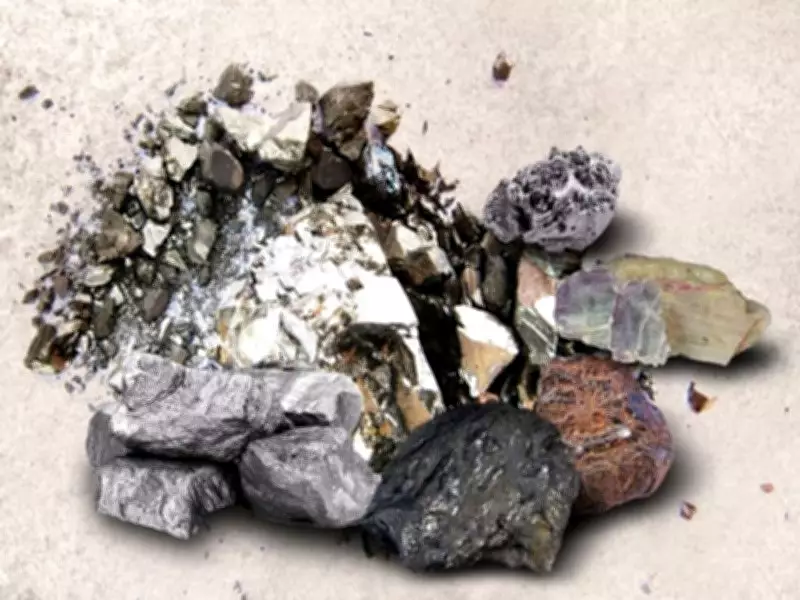
Geopolitical Rivalries Intensify India's Critical Minerals Strategy
In a world increasingly defined by strategic competition and technological advancement, India is placing a renewed and urgent emphasis on securing access to critical minerals. This focus is not merely an economic imperative but a geopolitical necessity, as nations vie for control over resources essential for the clean energy transition and advanced manufacturing.
The Strategic Importance of Critical Minerals
Critical minerals, including lithium, cobalt, nickel, and rare earth elements, form the backbone of modern technologies. They are indispensable for manufacturing electric vehicle batteries, renewable energy systems like solar panels and wind turbines, consumer electronics, and defense applications. As the global economy pivots towards sustainability and digitalization, demand for these minerals is projected to surge exponentially in the coming decades.
For India, which has ambitious goals to expand its renewable energy capacity and establish itself as a manufacturing hub under initiatives like Make in India, a stable supply of these minerals is crucial. Currently, the country relies heavily on imports, particularly from China, which dominates the processing and supply chains for many critical minerals. This dependence poses significant risks to India's economic security and strategic autonomy.

Geopolitical Drivers Behind the Push
The heightened focus on critical minerals is largely driven by escalating geopolitical tensions and the recognition of these resources as instruments of national power. Major economies, including the United States, the European Union, and China, have already formulated comprehensive strategies to secure their own supplies, often through strategic partnerships, investments in mining projects abroad, and domestic exploration.
India's approach is shaped by several key factors:
- Reducing Import Dependence: To mitigate vulnerabilities associated with over-reliance on a few supplier nations, especially in a volatile geopolitical landscape.
- Clean Energy Transition: Supporting national targets for renewable energy and electric mobility, which require substantial quantities of minerals like lithium for battery storage.
- Technological Sovereignty: Ensuring access to materials needed for advancing domestic industries in sectors such as electronics, aerospace, and defense.
- Global Partnerships: Engaging in bilateral and multilateral agreements, such as the Minerals Security Partnership, to diversify supply sources and enhance collaboration with like-minded countries.
India's Evolving Policy Framework
In response to these challenges, the Indian government has been actively developing a more coherent policy framework. Recent initiatives include the identification of a list of critical minerals specific to India's needs, efforts to auction mining blocks for minerals like lithium, and plans to establish domestic processing capabilities. The exploration of mineral reserves within the country, including potential discoveries in regions like Jammu and Kashmir, is also being prioritized.
Moreover, public sector enterprises and private companies are being encouraged to invest in overseas mining assets to secure long-term supply agreements. This outward-looking strategy complements domestic efforts and aligns with India's broader foreign policy objectives of strengthening economic ties with resource-rich nations in Africa, South America, and Australia.
Challenges and the Path Forward
Despite the strategic push, India faces several hurdles in building a resilient critical minerals ecosystem. These include technological gaps in extraction and processing, environmental concerns related to mining activities, and the need for significant capital investment. Additionally, the global competition for these resources is intensifying, making it imperative for India to act swiftly and decisively.
Experts suggest that a multi-pronged approach is essential. This involves:

- Accelerating domestic exploration and leveraging advanced technologies like AI for mineral discovery.
- Fostering innovation in recycling and material science to reduce primary resource consumption.
- Enhancing international diplomacy to secure favorable trade and investment deals.
- Implementing supportive policies, including incentives for private sector participation and research funding.
As geopolitical dynamics continue to evolve, India's focus on critical minerals is likely to deepen. The success of these efforts will not only bolster the nation's economic resilience but also strengthen its position in the global arena, ensuring that it can meet its developmental and environmental goals without being constrained by external dependencies.





