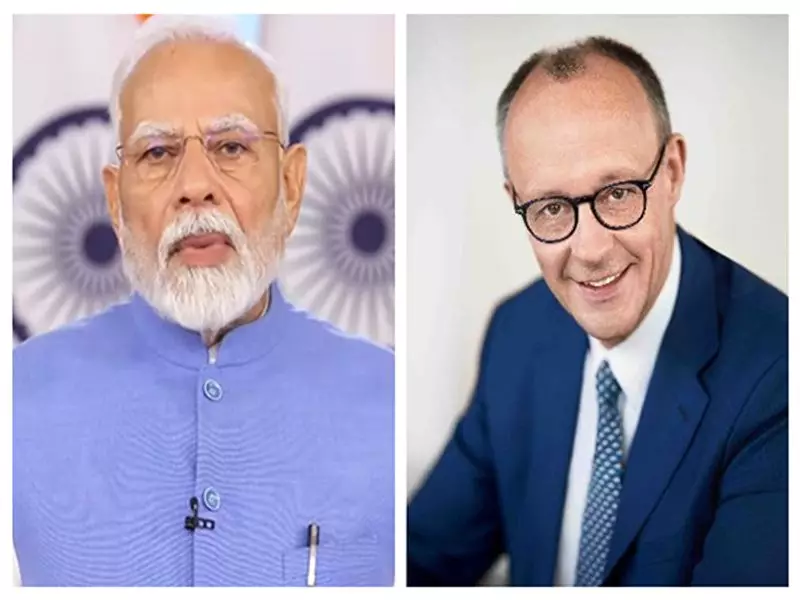
Friedrich Merz, the Chancellor of Germany, has embarked on a significant two-day official visit to India, marking a key diplomatic engagement between the two nations. The visit, scheduled for January 12 and 13, is set to feature high-level discussions aimed at strengthening the strategic partnership.
High-Profile Meetings in Gujarat's Capital
The focal point of the first day will be a meeting between Chancellor Merz and Indian Prime Minister Narendra Modi in Ahmedabad. This encounter is expected to cover a wide spectrum of bilateral issues, with a strong emphasis on enhancing economic collaboration and trade. The choice of Ahmedabad, a major industrial and business hub in Gujarat, underscores the visit's focus on commerce and investment.
According to official sources, the German leader is accompanied by a high-powered delegation comprising several members of the Bundestag (the German federal parliament) and senior officials. This indicates the importance Berlin attaches to its relationship with New Delhi. The discussions are anticipated to delve into areas of mutual interest, including defence cooperation, clean energy, sustainable technologies, and skill development.

Agenda: Strengthening Economic and Strategic Ties
The itinerary for January 12 is packed with engagements in Ahmedabad. Following his arrival, Chancellor Merz will proceed to meet with Prime Minister Modi. The leaders are expected to review the progress of the India-Germany Inter-Governmental Consultations (IGC), a unique bilateral mechanism that coordinates cooperation across multiple ministries.
Beyond the political dialogue, the visit has a pronounced economic dimension. Germany is India's largest trading partner in Europe, and both countries have been working to deepen this linkage. The talks will likely explore ways to boost German investments in India, particularly under initiatives like 'Make in India' and in emerging sectors such as green hydrogen and digital infrastructure.
The visit comes at a crucial time as both democracies seek to navigate a complex global geopolitical landscape. It reinforces the commitment to a rules-based international order and opens avenues for closer collaboration on global challenges.
Looking Ahead: The Broader Implications
After the meetings in Ahmedabad on January 12, Chancellor Merz will continue his program in New Delhi on January 13. While the full schedule for the second day is yet to be detailed, it typically involves interactions with other Indian ministers, business leaders, and think tanks.
This high-level exchange is more than a routine diplomatic event. It serves as a catalyst for future partnerships, potentially leading to new agreements and joint initiatives. The outcomes of the talks could significantly influence the trajectory of the India-Germany strategic partnership for the coming years, fostering greater technological exchange and people-to-people connections.
In summary, the visit by German Chancellor Friedrich Merz is a testament to the robust and growing ties between India and Germany. By choosing to engage directly in a commercial nerve centre like Ahmedabad, the visit highlights a shared vision for an ambitious economic future built on innovation and mutual trust.