

Gold Bars Spotted at White House Linked to Historic Venezuela Deal
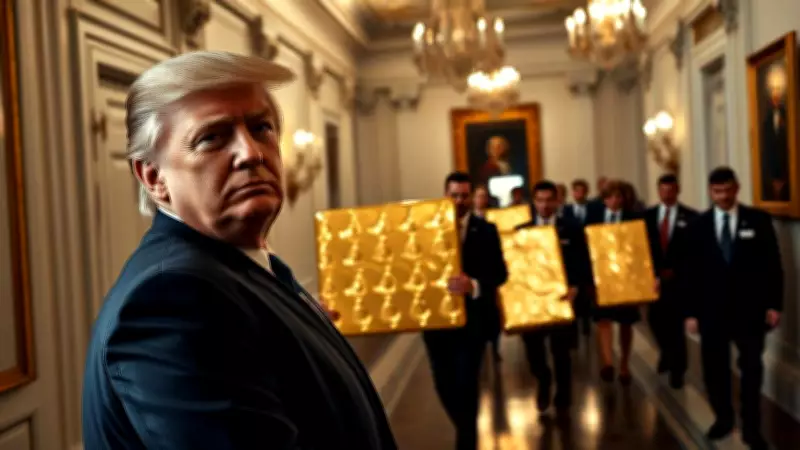
Last Friday afternoon, while President Donald Trump was occupied with executive orders and cabinet meetings concerning Iran, an unusual sight unfolded near the Oval Office. According to a report from the New York Post citing "On The Money," two men in dark suits were observed pushing a cart through the White House hallways. The cart appeared to be loaded with substantial gold bars, sparking immediate curiosity and speculation among onlookers.
Unusual Sight in the White House Hallways
The gold bars were described as exceptionally large, far surpassing the typical one-ounce pieces available at retail stores like Costco. Instead, they resembled the heavy, foot-long bars often associated with Fort Knox and featured in films such as James Bond. These bars are so weighty that lifting a single one would require both hands and significant physical effort, highlighting their substantial value and rarity.
When questioned about the spectacle, sources indicated that the dark-suited individuals, referred to as "G-Men," explained they were there to show President Trump part of a stash seized from former Venezuelan President Nicolas Maduro. This followed Maduro's arrest in January on various narco-terrorism charges, which included tens of millions of dollars' worth of gold locked away in a safe. However, further investigation revealed that this initial narrative was crafted from pyrite, or fool's gold, and not entirely accurate.

The Real Story Behind the Gold Bars
After making inquiries, On The Money discovered that the gold did indeed originate from Venezuela, but the true story involves a significant economic agreement. Interior Secretary Doug Burgum recently finalized a series of licensing deals, including one with Minerven, a Venezuelan state-owned gold mining company. Minerven agreed to sell physical gold to the Trafigura Group, known as Trafi, which trades gold on U.S. markets. This move is part of the White House's broader effort to reintegrate Venezuela into the global economy.
The large gold bars were carted around 1600 Pennsylvania Avenue as a symbolic trophy to commemorate this expanding economic alliance. This partnership marks a notable shift between two nations that were once sworn enemies but are now on a path toward economic cooperation, largely due to President Trump's actions in removing and imprisoning Maduro.
White House and Official Statements
Trump officials were cautious in confirming whether the gold bars were directly shown to the President, but they did not deny that the White House hosted the gold on Friday. In a statement to On The Money, the White House emphasized, "This historic gold deal between Trafi and Venezuela was in the works at President Trump’s direction. Secretary Burgum’s trip to Venezuela with the President’s National Energy Dominance Council sealed the deal. We are helping Venezuela restore their mining sector, which will help American industry get the minerals we need."
During a Fox News interview, Burgum provided additional insights into the gold-bar mystery. He stated, "On Friday, there was $100 million of gold that came from Venezuela to the United States. Venezuela’s got $500 billion of resources of gold. The enthusiasm is high in Venezuela as to what their future can be." This highlights the substantial economic potential being unlocked through this deal.
Venezuela's Economic Context and Future Prospects
While Venezuela is widely recognized for its oil reserves, it is also mineral-rich, particularly in gold. This Central American nation was once an economic powerhouse for decades but suffered a severe collapse under the leadership of Hugo Chavez and Nicolas Maduro. Both leaders drove out foreign investment, including from U.S. mining and oil companies, leading to economic deprivation and widespread poverty.
By imprisoning Maduro, the Trump administration aims to advance American business interests with a new and friendlier government led by Delcy Rodriguez. This strategy seeks to reverse the poverty inflicted on the Venezuelan people and restore economic stability. Last week, Burgum met with top Venezuelan energy and mining executives to discuss the deal between Minerven and Trafi, which appears to be the source of the gold bars seen at the White House.

Burgum added in his interview, "When we were there last week with oil and gas executives and top mining executives, they were excited to get back to Venezuela and explore the great opportunities available there. People of Venezuela are going to dedicate a statue for Trump because he is going to open their economy again, after more than two decades." This optimistic outlook underscores the transformative potential of this economic partnership.
In summary, the sight of gold bars at the White House symbolizes a pivotal moment in U.S.-Venezuela relations, driven by strategic economic deals and a shift toward cooperation under the Trump administration.





