

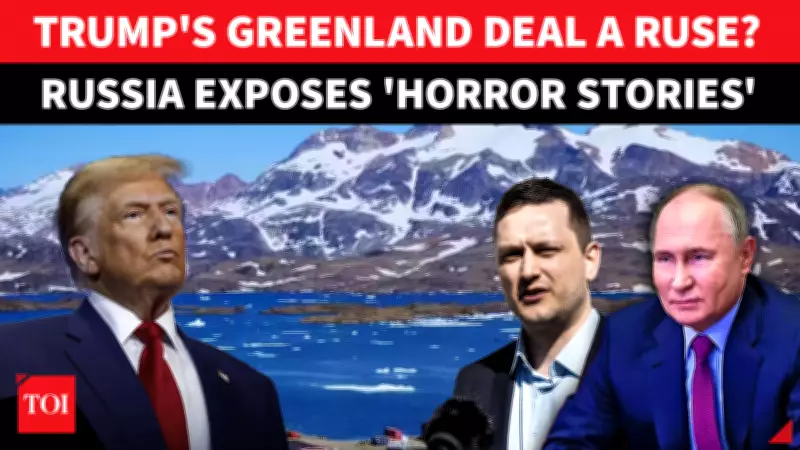
Greenland PM Issues Stark Warning to Washington Amid Arctic Geopolitical Tensions
In a significant development that underscores the escalating geopolitical competition in the Arctic region, Greenland's Prime Minister Jens-Frederik Nielsen has delivered a blunt message to the United States, asserting that the strategic Arctic island "can neither be bought nor sold." This declaration comes as Washington renews its strategic pressure over Greenland, reigniting long-standing tensions about control and sovereignty in the resource-rich polar area.
Trilateral Talks Begin Amid Fundamental Disagreements
While formal trilateral discussions involving Greenland, Denmark, and the United States have commenced, Prime Minister Nielsen has expressed serious reservations about Washington's underlying intentions. According to the Greenlandic leader, the United States continues to pursue long-term control over the territory, despite President Donald Trump having stepped back from earlier, more aggressive threats that included potential use of force.
The current standoff has created substantial anxiety among Greenland's population, who are caught between great power rivalries. More significantly, this diplomatic confrontation has exposed growing fractures within NATO unity, as member states grapple with conflicting strategic priorities in the rapidly changing Arctic landscape.

Russia Enters the Fray with Counter-Narrative
As Western powers express concerns about Russian and Chinese ambitions in the Arctic, Moscow has responded with a sharp rebuttal. Senior Russian security official Dmitry Medvedev has categorically dismissed Western claims about Russian or Chinese threats to Greenland's sovereignty, labeling them as completely fabricated "horror stories."
Medvedev has accused Western leaders of deliberately exaggerating security risks in the region to justify their own geopolitical expansion and military buildup. This Russian counter-narrative directly challenges the prevailing Western assessment of Arctic security dynamics and adds another layer of complexity to an already tense international situation.
Broader Implications for Arctic Security Architecture
The Greenland crisis represents more than just a bilateral dispute between the United States and Greenland. It highlights the broader strategic competition unfolding across the Arctic region, where melting ice caps are opening new shipping routes and access to previously inaccessible natural resources.
The involvement of multiple actors—including the United States, Russia, China, and European powers—creates a multipolar security environment with significant implications for global stability. The current tensions over Greenland sovereignty may serve as a bellwether for future conflicts as climate change continues to reshape geopolitical realities in the High North.
As diplomatic efforts continue through the trilateral framework, observers are closely monitoring whether a peaceful resolution can be reached that respects Greenland's autonomy while addressing legitimate security concerns of all parties involved in the Arctic region.






