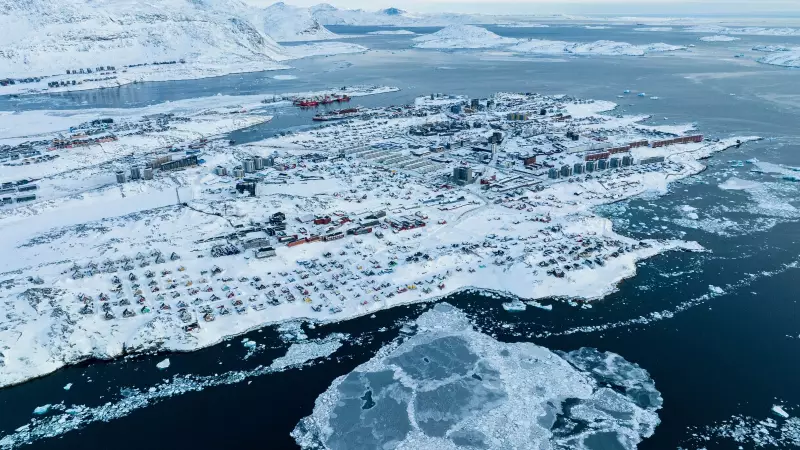
Greenland, the world's largest island, has unexpectedly found itself at the centre of global geopolitics, with former US President Donald Trump repeatedly expressing interest in acquiring the autonomous Danish territory. The island's strategic location in the Arctic and its vast reserves of untapped rare minerals have made it a coveted prize for superpowers. However, Greenland has consistently stated its desire to remain part of the Kingdom of Denmark, not the United States.
Greenland's Strategic Importance and Political Status
US President Donald Trump's pursuit of Greenland is driven by its critical positioning and resource wealth. Analysts suggest a potential US military seizure could severely damage the transatlantic NATO alliance between Denmark and the United States. Politically, Greenland operates under a unique self-governing system. It gained home rule in 1979 and expanded its autonomy in 2009, managing domestic affairs like healthcare and education. Denmark retains control over defence, foreign policy, and monetary policy. The head of government is Prime Minister Jens-Frederik Nielsen, while the Danish monarch, King Frederick X, remains the Head of State.
Geography, Climate, and Demographics of the Ice Giant
Located in the Northern Hemisphere, Greenland is surrounded by the Arctic Ocean to the north and the North Atlantic to the south. It is closer to North America but remains culturally and politically tied to Europe. The island spans a massive 2,166,086 square kilometres, with about 80% of its surface buried under ice caps and glaciers, making it home to the second-largest ice sheet after Antarctica.
The polar climate brings extreme winters, where temperatures can plunge to -50°C, and cool summers where they rarely exceed 15°C. Despite its enormous size, Greenland's population is only around 56,000, with roughly 20,000 residing in the capital, Nuuk. The official language is Greenlandic (Kalaallisut), with Danish and English also widely spoken.
Economy, Global Interest, and the EU Relationship
Greenland's economy is relatively small, primarily reliant on fishing, tourism, and limited mining. It uses the Danish krone (DKK), and its GDP was approximately $3.33 billion in 2023. Geopolitically, its Arctic location offers a strategic advantage for sea communications and monitoring military activities.
The United States views Greenland as a vital security partner, largely due to the Pituffik Space Base, crucial for missile defence and Arctic surveillance. Meanwhile, China is keenly interested in the island's rare earth minerals and infrastructure projects as part of its "Polar Silk Road" initiative. Climate change, which is warming the Arctic faster than the global average, is making these resources more accessible, with estimates suggesting 30% of the world's untapped natural gas may lie in the region.
Greenland's relationship with the European Union is distinct. It joined the European Community in 1973 with Denmark but left in 1985 following autonomy, primarily due to disputes over the Common Fisheries Policy. It now has a partnership agreement with the EU for fish exports and receives financial aid for development.
Natural Wonders and Unique Lifestyle
For visitors, Greenland offers breathtaking experiences. The Ilulissat Icefjord, a UNESCO World Heritage site, features the fastest-moving glacier, Sermeq Kujalleq. Disko Island provides Arctic adventures like whale watching and hiking. The winter showcases the Northern Lights and dog sledding, while summer brings the midnight sun and kayaking. The east coast is home to the Scoresby Sund, the world's longest fjord system.
The island's flora includes over 700 plant species, with dwarf shrubs being common. Its fauna features iconic Arctic mammals like the musk ox, reindeer, polar bear, and Arctic wolf. Aquatic life includes whales, seals, and walruses, with reindeer hunting being a traditional activity.