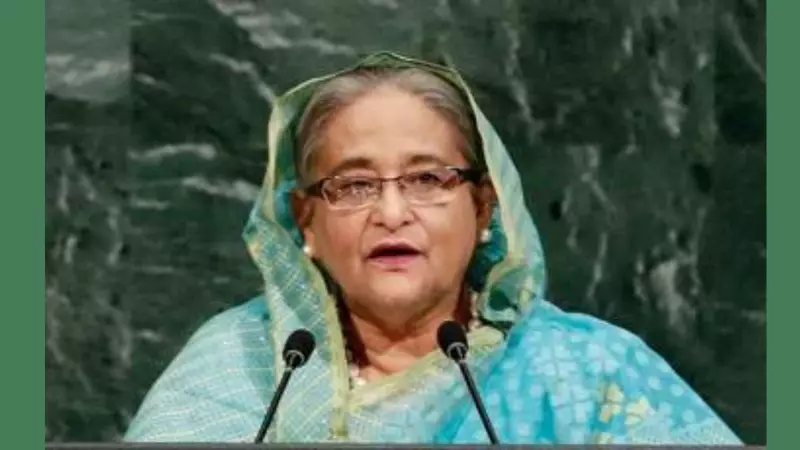
Bangladesh's Prime Minister Sheikh Hasina, currently residing outside her country, has made significant public statements expressing gratitude towards a key neighbor and launching criticism against a prominent domestic figure. The developments highlight the ongoing political complexities surrounding her leadership.
A Message of Gratitude from Afar
In a notable gesture, Sheikh Hasina has formally thanked the government and people of India for their steadfast support. This acknowledgment comes during a period when she is not physically present in Bangladesh, underscoring the depth of the bilateral relationship between the two South Asian nations. Analysts view this public appreciation as a reinforcement of the strategic and historical ties that bind Dhaka and New Delhi.
The Indian government has consistently supported Hasina's administration, viewing it as a pillar of stability and a partner in regional connectivity and security. Her explicit thanks from her current location confirms the continued importance of this alliance for her political standing, even from a distance.

Sharp Criticism for Nobel Laureate Yunus
In the same breath, Prime Minister Hasina directed strong criticism towards Muhammad Yunus, the Bangladeshi microfinance pioneer and Nobel Peace Prize laureate. She accused him of exploiting the poor and attempting to undermine the country's economic and political stability.
Hasina's administration has had a long and contentious relationship with Yunus. The government has previously pursued legal cases against him, alleging labor law violations at Grameen Telecom, a company he founded. From her exile, Hasina framed Yunus as an agent of external forces seeking to control Bangladesh's destiny, a charge he has consistently denied.
This attack amplifies the domestic political rift and suggests that the confrontation with the celebrated economist remains a central theme for Hasina and her party, the Awami League, regardless of her geographical location.
The Context of Exile and Political Future
The backdrop to these statements is Sheikh Hasina's current status of being in exile. While the exact circumstances and location are part of a sensitive political narrative, her ability to communicate key messages—praising an ally and chastising a perceived adversary—demonstrates her ongoing engagement with Bangladesh's political discourse.
Observers note that these comments are carefully calibrated. Thanking India solidifies a crucial external partnership, while attacking Yunus mobilizes her domestic base by presenting a common antagonist. This strategy aims to maintain her political relevance and narrative control during a period of physical absence from the nation she leads.
The situation continues to evolve, with these statements likely influencing diplomatic perceptions and domestic political alignments. The focus remains on how these dynamics will shape Bangladesh's trajectory in the coming months, especially concerning governance and international relations.