

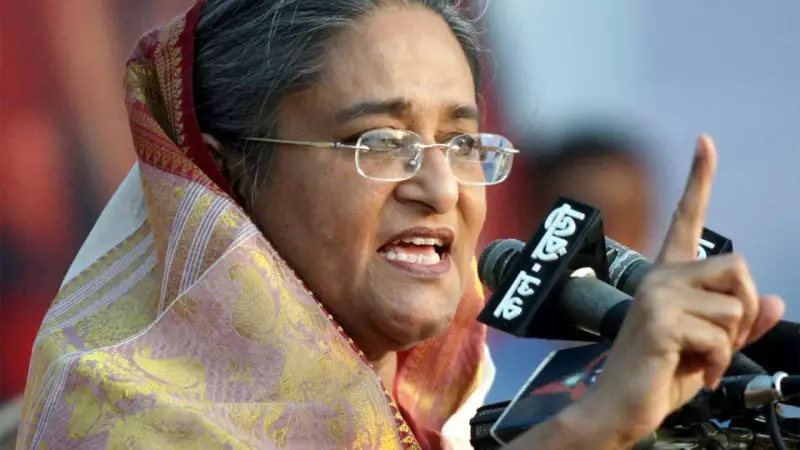
Former Bangladesh Prime Minister Sheikh Hasina has launched a sharp critique against the country's interim administration led by Nobel laureate Muhammad Yunus. She accuses it of presiding over a state of "lawlessness" and a breakdown of governance, a charge she links directly to the recent killing of a prominent student leader.
Student Leader's Death Sparks Political Firestorm
The controversy erupted following the death of Sharif Usman Hadi, a youth leader and spokesperson for the political platform Inqilab Mancho. Hadi was a key figure in the 2024 "July uprising" that led to Hasina's removal from office. On December 12, he was shot at close range by unidentified assailants while travelling in a rickshaw in Dhaka's Bijoynagar area.
He sustained a critical gunshot wound to the head. After initial treatment at Dhaka Medical College Hospital and Evercare Hospital, his condition worsened. He was subsequently airlifted to Singapore and admitted to the Neurosurgical Intensive Care Unit at Singapore General Hospital. After a six-day fight for his life, Inqilab Mancho announced his death via social media.

Hasina's Scathing Accusations Against Interim Govt
In an email interview with ANI, Sheikh Hasina did not mince words. She stated that Hadi's tragic killing "reflects the lawlessness that uprooted my government and has multiplied under Yunus." She claimed violence has become the norm, with the interim government either in denial or powerless to stop it.
Hasina warned that such instability is not only tearing Bangladesh apart internally but is also severely straining its crucial relationship with neighbouring India. "India sees the chaos, the persecution of minorities, and the erosion of everything we built together," she asserted. She argued that a government's inability to maintain basic order destroys its credibility on the international stage.
Her criticism extended to the protection of minorities, citing the lynching of 27-year-old Hindu youth Dipu Chandra Das in Mymensingh district. Das was allegedly beaten to death and his body set on fire over blasphemy accusations. Hasina held the Yunus-led administration responsible for this failure, linking it directly to diplomatic tensions.
Foreign Policy and Radicalism Concerns
The former Prime Minister expressed grave concern about the growing influence of radical Islamist forces. She alleged that the interim government has released convicted terrorists and allowed groups linked to international terrorist organisations to enter public life, threatening Bangladesh's secular foundations.
"Yunus has placed extremists in cabinet positions... He is not a politician and has no experience governing a complex nation," Hasina claimed. She fears radicals are using Yunus as an acceptable international face while systematically radicalising institutions from within.
On foreign policy, Hasina criticised the administration's "headlong embrace" of Pakistan, arguing that such strategic realignments require a democratic mandate which an unelected interim government lacks. She emphasised that the deep, fundamental ties with India will endure long after the current administration is gone.
Bangladesh continues to experience significant unrest with protests, vandalism, and arson attacks, casting a shadow over the country as it prepares for elections scheduled next year.






