

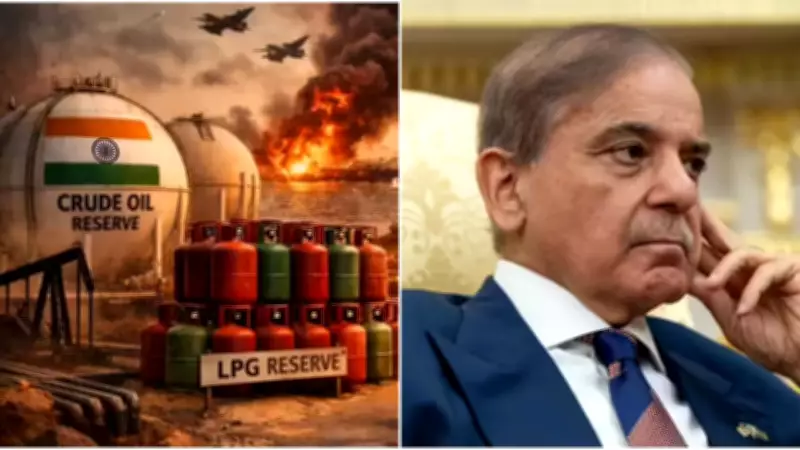
Strait of Hormuz Blockade Threatens India's Oil and LPG Supply Chain
The escalating tensions in West Asia, particularly the potential closure of the vital Strait of Hormuz, pose a significant risk to India's energy security. India relies on imports for a staggering 90% of its crude oil requirements, which also form the backbone of over 60% of its LPG and LNG production. Any disruption to this maritime chokepoint could severely impact the nation's fuel supply and manufacturing sectors.
India's Strategic Response to Global Oil Volatility
In response to these geopolitical uncertainties, Indian officials have implemented a multi-pronged strategy to safeguard domestic stability. The government has significantly increased its procurement of Russian oil, diversifying its supply sources away from traditional Middle Eastern routes. Furthermore, India has defied the International Energy Agency's call to tap into strategic petroleum reserves, prioritizing uninterrupted domestic production and supply. Authorities have firmly assured citizens that there will be no immediate hikes in petrol or diesel prices, aiming to cushion the economy from external shocks.
Pakistan Implements Drastic Austerity Measures Amid Fuel Shortages
The ripple effects of the Iran conflict and broader Middle East crisis have reached Pakistan, compelling Prime Minister Shehbaz Sharif to announce a series of emergency austerity measures. To combat severe fuel shortages and soaring crude prices, the government has mandated a 50% reduction in fuel usage for all official vehicles, with 60% of the government fleet being grounded indefinitely.

In a move to lead by example, cabinet members and lawmakers will forgo 25% of their salaries for the next two months. Non-essential government spending and all foreign travel have been banned until June 2026. Additionally, the public sector will transition to a four-day workweek, with 50% of employees working remotely to reduce commuting and energy consumption. Educational institutions have shifted to online classes to further conserve resources.
Iran Dismisses Trump's Threats Over Hormuz Blockade
Amid the volatile Israel-Iran conflict, Iran's security chief Ali Larijani issued a stark warning to former US President Donald Trump, who had vowed to strike "20 times harder" and destroy Iran if it moved to block oil flows through the Strait of Hormuz. Larijani scoffed at these remarks, posting on social media platform X that Iran fears no "empty threats."
"Don't get eliminated yourself—we fear no empty threats," Larijani stated, highlighting Iran's defiance. He reminded that even greater powers have failed to eliminate Iran in the past. Trump's warnings of "death, fire, fury" came as disruptions threatened 20% of global oil supplies, with US-Israel strikes continuing to target Tehran while Iran eyes potential retaliation.
CJI Surya Kant Warns Against Questioning Judicial Integrity
In a firm rebuke from the Supreme Court, Chief Justice of India Surya Kant stated that questioning the integrity of judicial officers will not be tolerated. This stern warning came during hearings on a petition concerning the pendency of claims in West Bengal's Summary Inquiry Reports, amid a trust deficit between the Trinamool Congress and the Election Commission of India over electoral roll revisions.
The bench, led by CJI Kant, expressed displeasure over pleas that cast doubt on cases handled by deputed judicial officers from Bengal, Odisha, and Jharkhand. The court directed the Calcutta High Court Chief Justice to constitute an appellate bench specifically for claims appeals, with the Election Commission bearing all associated costs. Reports indicate that while over 10 lakh claims have been decided, a staggering 63 lakh remain pending.
Arshdeep Singh Penalized Following T20 World Cup Triumph
Indian pacer Arshdeep Singh has been fined 15% of his match fee and handed one demerit point for breaching the ICC Code of Conduct. The incident occurred during the T20 World Cup 2026 final against New Zealand in Ahmedabad. Fielding off his follow-through in the 11th over, Arshdeep aggressively threw the ball, which struck New Zealand batter Daryl Mitchell on the pads.

The International Cricket Council deemed the act inappropriate and potentially dangerous, resulting in a Level 1 breach under Article 2.9. This marks Arshdeep's first demerit point in a 24-month period. The penalty comes despite India's celebrated victory in the tournament final, underscoring the ICC's strict adherence to player conduct regulations.
Commercial and Hospitality Sectors Feel the Pinch
The ongoing crisis has extended beyond government corridors, severely impacting commercial operations. Hotels and restaurants in major metropolitan cities face potential shutdowns due to disruptions in commercial LPG supply chains. In response, the government has formed a high-level panel to address these supply issues and prevent widespread operational halts in the hospitality industry.
Meanwhile, attacks continue to escalate across the region. The UAE embassy in Iraq was recently targeted, and Hezbollah drones have been launched against Israel, indicating the broadening scope of the conflict. These developments keep global markets on edge, particularly affecting energy-dependent economies like India and Pakistan.





