

Strait of Hormuz Becomes Flashpoint in US-Iran Standoff, Disrupting Global Oil Trade
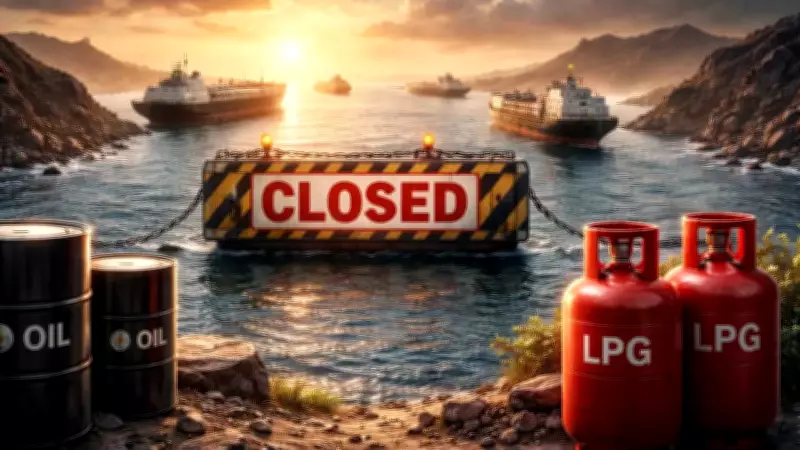
The Strait of Hormuz, a narrow but critical maritime passage, has emerged as the epicenter of the escalating conflict between the United States and Iran. Characterized by a pattern of being open, closed, and then closed but open, this strategic waterway is now a key instrument in the pressure tactics employed by both nations. As a channel for nearly one-fifth of the world's oil trade, any disruption here sends shockwaves through global energy markets, leaving economies dependent on Middle Eastern supplies facing severe uncertainties and potential shortages.
India's Energy Lifeline Under Threat as Iranian Actions Complicate Transit
India, among the Asian economies heavily reliant on smooth shipping through the Strait of Hormuz for its crude oil, liquefied petroleum gas (LPG), and liquefied natural gas (LNG) needs, finds itself in a precarious position. Last month, Iran decided to restrict access to this vital energy corridor amid its conflicts with the US and Israel, though it intermittently allowed Indian vessels to pass. However, the situation has grown more complex. Recently, Iran declared the strait open, but the US maintained a blockade on ships heading to or from Iranian ports, prompting Iran to close the passage once again.
Iran's Blockade and Attacks on Indian-Flagged Vessels Spark Diplomatic Crisis
In a concerning development, the Indian-flagged tanker Desh Garima, carrying crude oil, managed to navigate through the Strait of Hormuz successfully on a Saturday afternoon. Yet, two other vessels, the Sanmar Herald and Jag Arnav, were not as fortunate. They came under fire from boats belonging to Iran's Islamic Revolutionary Guard Corps (IRGC) while traversing the conflict-ridden route and were compelled to turn back. Fortunately, no injuries were reported among the crew members.

In response, India summoned Iranian ambassador Mohammad Fathali on Saturday to express its "deep concern" over the firing incident. During the meeting, Foreign Secretary Vikram Misri emphasized the paramount importance India places on the safety of merchant vessels and seafarers. He reminded the envoy that Iran had previously ensured secure passage for ships bound for India and urged Tehran to swiftly restore safe transit for Indian-bound ships through the strait. The Ministry of External Affairs confirmed that the ambassador agreed to relay these concerns to Iranian authorities.
Implications for India: Supply Disruptions and Strategic Adjustments
Data from MarineTraffic reveals that several Indian and foreign ships destined for Indian ports are currently awaiting clearance near the Strait of Hormuz. Official figures indicate:
- 13 Indian vessels are in the Persian Gulf (west of Hormuz)
- 6 are in the Gulf of Oman (east of Hormuz)
- 1 is in the Gulf of Aden
- 3 are in the Red Sea
According to the petroleum ministry, 17 vessels have been identified for evacuation, including four LPG carriers, three LNG carriers, and ten crude oil tankers. Of these, three are Indian-flagged, while the remaining fourteen are foreign vessels. Separately, the chemicals and fertilisers ministry has prepared a list of 16 additional ships for evacuation, including the Indian-flagged Jag Arnav, which was targeted by the IRGC.
Since the onset of the US-Iran conflict, India, which depends largely on imports for its energy needs, has experienced significant supply disruptions, particularly impacting LPG availability. The government was forced to direct supplies for domestic consumption and restrict commercial availability. The latest update indicates that domestic LPG supplies continue to face some disruption due to the geopolitical situation, though distribution to households has been prioritized. On the commercial side, allocations have been raised to around 70% of pre-crisis levels, including reform-linked supplies.

India's Crude Oil Strategy: Diversification and Increased Russian Imports
On the crude oil front, India has aggressively stepped up procurement of Russian crude oil since the conflict began. In fact, India's imports of Russian oil are now near their June 2023 highs, and flows are unlikely to abate in the near term. This has been facilitated by the Donald Trump administration's decision to waive sanctions on Russian oil for a month, later extended by another month. Experts suggest that while India's crude oil basket is diversified, and Russian crude availability mitigates concerns, LPG and LNG may continue to face constraints.
Sumit Ritolia, Manager of Modelling and Refining at Kpler, provided insights: "India's crude oil supply currently appears stable to cover domestic demand, supported by continued imports from Venezuela, West Africa, and other key suppliers, alongside the extension of the US sanctions waiver, which allows access to Russian crude already at sea to meet near-term requirements. April Russian barrel imports have picked up to around 1.6 million barrels per day for now, with a possibility of further increase."
However, he noted that LPG and LNG supplies remain relatively constrained. "According to Kpler data, at least two LPG tankers are presently stranded near the Strait of Hormuz. Should the blockade persist, particularly if restrictions extend to Indian-flagged vessels, there could be emerging supply challenges in the coming days," he added.
The ongoing blockade and attacks underscore the fragile nature of global energy security, with India navigating a delicate balance between diplomatic engagements and strategic energy procurement to safeguard its economic interests.





