

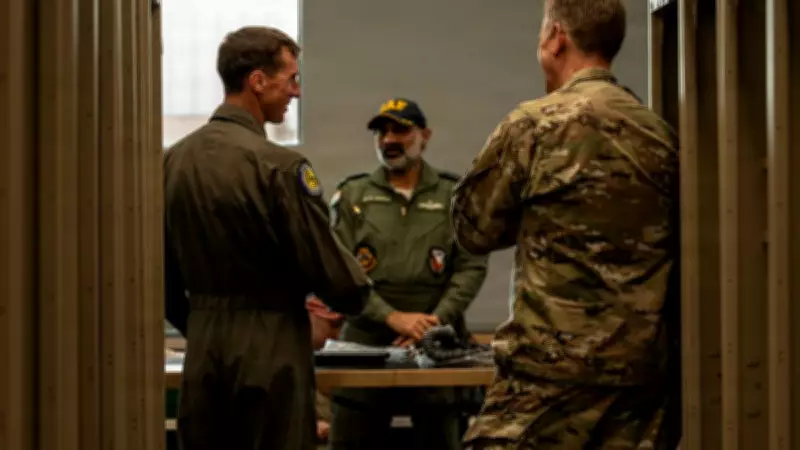
IAF Chief Takes to the Skies in Advanced US F-15EX Eagle II Fighter Jet
In a landmark event that underscores the deepening strategic partnership between India and the United States, Indian Air Force (IAF) Chief Air Chief Marshal VR Chaudhari recently piloted the state-of-the-art US F-15EX Eagle II fighter aircraft. This high-profile flight, conducted during an official visit, serves as a powerful symbol of the growing military interoperability and defence collaboration between the two nations.
A Milestone in Bilateral Defence Relations
The flight of the IAF Chief in the F-15EX Eagle II is not merely a ceremonial gesture but a substantive demonstration of the trust and technological exchange flourishing within the India-US defence framework. This advanced twin-engine, all-weather multirole fighter jet, manufactured by Boeing, represents the pinnacle of American combat aviation technology. By experiencing its capabilities firsthand, Air Chief Marshal Chaudhari has gained critical insights that could inform future procurement decisions and operational strategies for the Indian Air Force.
This engagement is widely viewed as a significant confidence-building measure, paving the way for more intricate joint exercises, potential technology transfers, and co-development projects in the defence sector.Technical Prowess of the F-15EX Eagle II
The F-15EX Eagle II is a formidable fourth-generation-plus fighter aircraft, boasting enhancements that ensure its relevance in modern aerial warfare. Key features include:

- Advanced Avionics: Equipped with the latest Eagle Passive/Active Warning and Survivability System (EPAWSS) for superior electronic warfare and threat detection.
- Weapons Capacity: Can carry a massive payload of up to 29,500 pounds of air-to-air and air-to-ground munitions.
- Network-Centric Capabilities: Features open mission systems architecture, allowing seamless integration with other platforms in a networked battlespace.
- Cost-Effectiveness: Designed with a focus on lower lifecycle costs and easier maintenance compared to newer stealth fighters.
Flying this aircraft provides the IAF leadership with a direct understanding of its operational limits, sensor fusion, and combat performance, which are invaluable for future defence planning.
Strategic Implications for India-US Defence Partnership
This event significantly boosts the India-US defence relationship, which has been steadily expanding over the past two decades. The flight aligns with broader initiatives such as:
- Enhancing Interoperability: It prepares both air forces for more complex and integrated joint operations, crucial for regional security and humanitarian missions.
- Technology and Information Sharing: It fosters an environment conducive to sharing critical defence technologies and intelligence, strengthening India's indigenous defence manufacturing under initiatives like 'Make in India'.
- Countering Regional Threats: As both nations share concerns over regional stability, such cooperation enhances collective deterrence capabilities.
The demonstration is part of a series of high-level military exchanges that include exercises like Cope India and the signing of foundational defence agreements, cementing a comprehensive global strategic partnership.
Future Prospects and Procurement Considerations
While the IAF has not announced any immediate plans to acquire the F-15EX, this flight could influence future procurement discussions. The Indian Air Force is continuously modernizing its fleet to address diverse security challenges. Evaluating advanced platforms like the F-15EX Eagle II helps in assessing options for multirole fighters that complement existing assets like the Rafale and Sukhoi Su-30MKI.
Experts suggest that such engagements are critical for informed decision-making, potentially leading to tailored defence solutions that meet India's specific operational requirements while bolstering industrial cooperation between Indian and US defence firms.

In conclusion, the IAF Chief's flight in the F-15EX Eagle II marks a pivotal moment in India-US defence ties. It transcends symbolic diplomacy, offering tangible benefits in terms of operational knowledge, strategic alignment, and future collaboration. As both nations navigate an increasingly complex geopolitical landscape, such steps are essential for fostering a resilient and technologically advanced defence partnership.





