

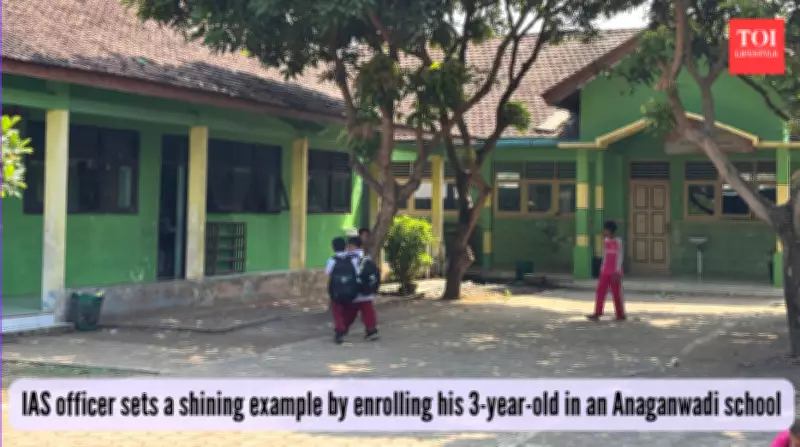
IAS Officer Makes Quiet Statement by Enrolling Daughter in Government Anganwadi
In an era where elite private schools often dominate parental aspirations, a senior administrative officer from Uttar Pradesh has made a deliberate and thoughtful choice that is resonating across educational circles. Pulkit Garg, the District Magistrate of Chitrakoot, has enrolled his three-year-old daughter, Siya, in a government Anganwadi centre, setting a powerful example for communities to reconsider long-held assumptions about public education.
A Personal Decision with Public Implications
The admission process itself was marked by its simplicity and personal touch. According to reports from Dainik Bhaskar, Garg personally visited the Anganwadi centre located in Karvi's Naya Bazaar area, also known as Dhanush Chauraha, several days before the news became public. He completed the enrollment formalities himself for the playgroup section of the composite school-linked facility.
This quiet action, devoid of any ceremonial fanfare or social media spectacle, carries significant symbolic weight. By choosing a government institution for his own child, Garg is challenging the persistent stigma that often surrounds public educational facilities, particularly Anganwadis that serve as crucial early childhood development centers.

Transforming Perceptions About Government Education
In his conversation with Dainik Bhaskar, Garg articulated a compelling perspective on the evolution of government education infrastructure. "Things have changed," he emphasized, pointing to tangible improvements in multiple areas:
- Enhanced physical facilities and learning environments
- Better allocation of educational resources and materials
- Overall elevation in teaching quality and pedagogical approaches
The officer made a direct appeal to fellow parents, stating, "If I can send my child to a government institution, other parents shouldn't be scared to do the same." He stressed that contemporary assessments of Anganwadis and government schools need to move beyond outdated perceptions rooted in past experiences.
Focus on Foundational Childhood Development
Garg highlighted the essential elements that matter most during early childhood development stages:
- Nutrition and proper dietary provisions
- Health monitoring and preventive care
- Safe and secure learning environments
- Value-based education and character building
He expressed confidence that government Anganwadis are effectively addressing these fundamental needs through their structured programs. The District Magistrate further encouraged parents, village communities, and even fellow government officials to overcome lingering doubts and develop renewed trust in these public institutions.
"The system only gets stronger when people actually believe in it," Garg remarked, underscoring the symbiotic relationship between public participation and institutional improvement.
Positive Adaptation and Broader Impact
Initial reports indicate that young Siya has adapted remarkably well to her new environment. Social media videos circulating online show the child:
- Engaging happily in play activities with other children
- Participating in educational games designed for early learning
- Enjoying music and movement through nursery rhyme sessions
Her positive experience serves as tangible evidence supporting her father's advocacy for government early childhood education.
Consistent Public Service Approach
Although Pulkit Garg has served as Chitrakoot District Magistrate for approximately four months, he has already established a reputation for community-focused initiatives. Prior to this educational statement, he received recognition for promoting water conservation efforts across the district, demonstrating a consistent pattern of addressing practical community needs through administrative action.

This Anganwadi enrollment decision represents more than just a personal parenting choice—it serves as a thought-provoking case study in leadership by example. At a time when educational disparities remain a significant concern, such actions by public officials can potentially influence broader societal attitudes toward government institutions and their evolving capabilities.
