

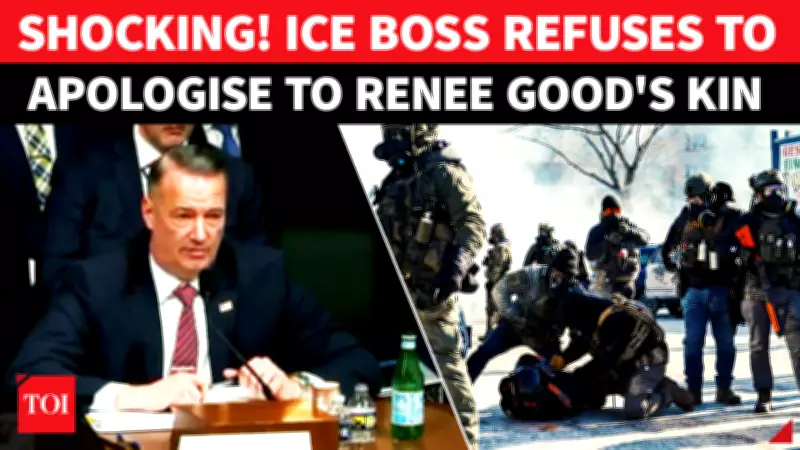
Acting ICE Director Delivers Unyielding Defense in Contentious Congressional Hearing
In a high-stakes appearance before the House Committee on Homeland Security, Acting U.S. Immigration and Customs Enforcement (ICE) Director Todd Lyons delivered a resolute defense of his agency's officers and their enforcement tactics. The hearing, convened in the wake of two fatal shootings of Americans by federal officers during immigration operations, became a platform for intense political confrontation.
A Firm Stance Against Intimidation
Lyons, appearing alongside leaders from U.S. Customs and Border Protection and U.S. Citizenship and Immigration Services, asserted that ICE personnel would not be intimidated as they carry out President Donald Trump's mass deportation agenda. "We stand by our officers and the procedures they follow," Lyons stated, emphasizing that enforcement actions are conducted within established guidelines.
The testimony sparked fierce questioning from Democratic committee members, who demanded accountability and transparency. In a notable exchange, Lyons offered a point-blank refusal to apologize, responding with a terse "No, sir" when pressed by Representative Eric Swalwell. This moment underscored the deep partisan divide over immigration policy and enforcement methods.

Context of Tragedy and Political Tension
The hearing was directly prompted by the recent deaths of two American citizens during separate immigration enforcement actions. These incidents have ignited a national debate over the use of force by federal agents and the implementation of aggressive deportation policies.
While Democrats criticized the operations as overly harsh and called for reforms, many Republican members voiced strong support for the officers, framing the actions as necessary for national security and border integrity. Lyons reiterated that all enforcement operations adhere to strict procedures and highlighted ongoing efforts to increase accountability, such as the expanded use of body cameras by officers in the field.
Broader Implications and Ongoing Scrutiny
Despite these assurances, calls for greater oversight and reform continue to mount. The hearing revealed a stark contrast in perspectives:
- Democratic Focus: Emphasizing civilian safety, procedural transparency, and the need for independent reviews of fatal incidents.
- Republican Support: Backing the officers' right to self-defense and the administration's broader immigration enforcement objectives.
Lyons concluded his testimony by reaffirming the agency's commitment to its mission, even as it faces sustained criticism. "Our officers perform a difficult and dangerous job, and they do so with professionalism," he asserted, leaving the committee with a clear message of unwavering resolve.






