India Declines Participation in Trump's 'Board of Peace' Initiative at Davos
In a significant diplomatic development, India was notably absent from the stage as US President Donald Trump unveiled his "Board of Peace" initiative at the World Economic Forum in Davos on Thursday. This absence came despite New Delhi receiving a formal invitation to join the initiative just days earlier, on Sunday. As of now, India has neither officially accepted nor rejected the offer, maintaining a stance of strategic silence on the matter.
Pakistan's Presence Highlights Regional Contrast
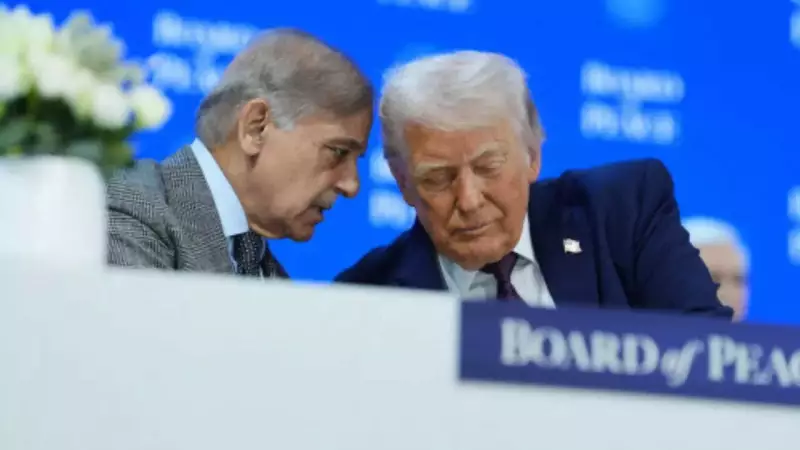
The signing ceremony for the "Board of Peace" witnessed the participation of Pakistan's Prime Minister Shahbaz Sharif, creating a stark contrast with India's non-participation. According to a White House statement shared on social media platform X by Washington's ambassador to New Delhi, Sergio Gor, President Trump had personally invited India to join this initiative. In his letter to Prime Minister Narendra Modi, Trump expressed his "great honour" in extending the invitation, describing it as a "critically historic and magnificent effort to solidify peace in the Middle East" and a "bold new approach to resolving global conflict."
Composition and Scope of the Peace Board
The countries represented on the newly formed Board of Peace include a diverse array of nations from various regions:

- Bahrain
- Morocco
- Argentina
- Armenia
- Azerbaijan
- Bulgaria
- Hungary
- Indonesia
- Jordan
- Kazakhstan
- Kosovo
- Pakistan
- Paraguay
- Qatar
- Saudi Arabia
- Turkey
- The UAE
- Uzbekistan
- Mongolia
Interestingly, the number of participants fell short of initial expectations. US officials had earlier indicated that around 35 countries were anticipated to attend the launch. Notably, Western European nations chose to stay away from the initiative, with some expressing reservations about a peace board that could potentially include countries like Russia, which is currently engaged in conflict with one of their allies.
Trump's Vision for International Conflict Resolution
During the unveiling ceremony at Davos, President Trump articulated that the "Board of Peace" was conceived as a mechanism to help resolve international conflicts. He emphasized that "everybody" wanted to be part of this initiative, underscoring its perceived importance in global diplomacy. Additionally, Trump clarified that he would continue to collaborate with other international bodies, including the United Nations, suggesting that this new board is intended to complement rather than replace existing diplomatic frameworks.
India's decision to skip this event raises questions about its diplomatic priorities and strategic calculations in the evolving global landscape. The presence of Pakistan on the stage, coupled with India's absence, adds another layer to the complex geopolitical dynamics in South Asia and beyond. As the world watches how this "Board of Peace" evolves, India's stance may reflect a careful balancing act between engaging with new international initiatives and maintaining its traditional diplomatic positions.