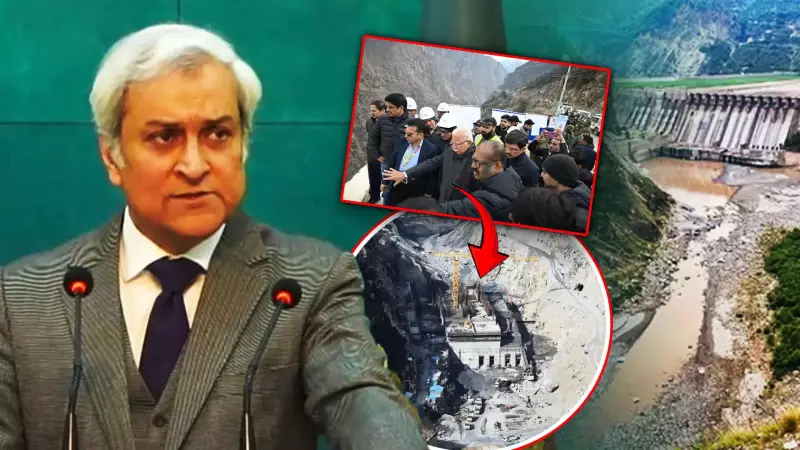
In a significant strategic move, India is accelerating the development of four crucial hydropower projects on the Chenab river in Jammu and Kashmir. This push marks a decisive shift in New Delhi's approach to managing the waters of the Indus basin, directly impacting the hydrological equation with neighboring Pakistan.
Four Projects on the Fast Track
The central focus of this accelerated drive is a quartet of major projects: Pakal Dul, Kiru, Kwar, and Ratle. Authorities have now set fixed deadlines and instituted strict monitoring mechanisms to ensure their timely completion. Among these, the Pakal Dul project stands out as a 1,000-megawatt endeavor. Upon completion, it will not only be India's highest dam but also the first storage facility built on a river that flows directly into Pakistan.
This development is particularly critical because the Chenab is a major tributary of the Indus river system. The ability to store and regulate water at Pakal Dul will provide India with greater operational control over downstream flows, all while operating within the technical confines of the existing Indus Waters Treaty (IWT).

A Frozen Treaty and Strategic Calculations
The acceleration comes against the backdrop of the Indus Waters Treaty being effectively frozen due to longstanding disputes and a lack of constructive dialogue. With the treaty mechanism stalled, India has decided to move forward decisively with projects it is entitled to build under the treaty's provisions.
For Pakistan, every Indian move on the Chenab carries immense weight. Over 90 percent of Pakistan's agriculture and the bulk of its water infrastructure are reliant on the Indus river system, whose key rivers—the Indus, Jhelum, and Chenab—originate in Indian territory. This geographical reality makes water a central, and often contentious, element of bilateral relations.
Implications for Regional Water Dynamics
The fast-tracking of these projects represents more than just infrastructure development; it is a recalibration of water governance and strategic leverage. Once commissioned, the Pakal Dul facility will allow India to manage seasonal water variability more effectively, potentially using stored water for irrigation and power generation during lean periods.
Experts view this as India moving to fully utilize its legal share of water under the IWT, a right it has historically been cautious in exercising to avoid escalating tensions. The current approach signals a more assertive posture in securing national interests regarding a vital resource, especially in the absence of functional bilateral cooperation on water issues.
The construction activity deep in the mountains of Jammu and Kashmir is thus redrawing the lines of hydrological control in South Asia, with long-term implications for regional agriculture, ecology, and geopolitics.