

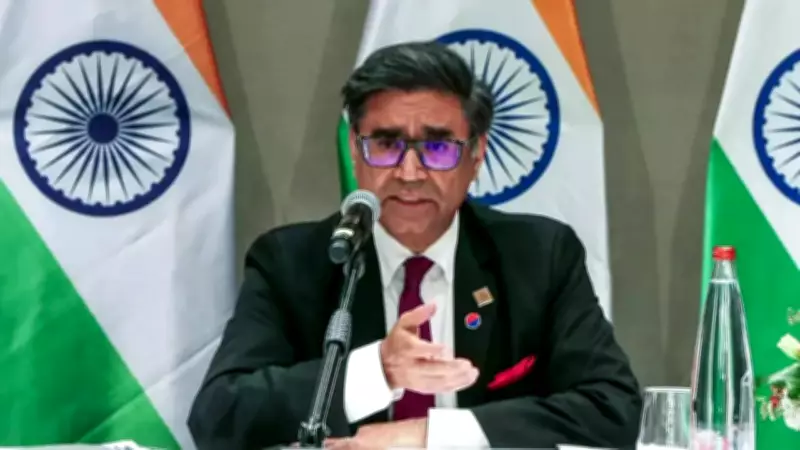
India Advocates for Diplomatic Resolution at International Strait of Hormuz Meeting
Foreign Secretary Vikram Misri represented India at a crucial virtual meeting hosted by the United Kingdom on Thursday, focusing on efforts to secure the strategically vital Strait of Hormuz. The gathering, which saw participation from more than 60 countries, aimed to discuss diplomatic and political measures rather than military actions to restore and ensure freedom of navigation through this key global energy route.
India's Key Points on Navigation and Security
During the meeting, Misri strongly emphasized the fundamental principles of freedom of navigation and unimpeded transit through international waterways, as detailed in an official Indian readout. The government highlighted that he also pointed to the significant impact of the ongoing crisis on India's energy security, underscoring a sobering reality: India remains the only nation to have suffered the loss of mariners in recent attacks on merchant shipping in the Gulf region.
"He (Misri) also underlined that the way out of the crisis consisted of de-escalation and a return to the path of diplomacy and dialogue among all concerned parties," stated the Indian readout, reinforcing New Delhi's commitment to peaceful resolution mechanisms.

Context of the UK Meeting and International Dynamics
This UK-led meeting followed recent comments by US President Donald Trump, who asserted that Asian and European nations, which are more reliant on oil and gas passing through the Strait of Hormuz, should bear greater responsibility for keeping the chokepoint open. Notably, Washington was reported to have skipped the virtual meeting, which was chaired by British Foreign Minister Yvette Cooper, indicating complex international alignments on the issue.
India's Strategic Position and Direct Engagement with Iran
While India actively participated in the discussions, it has not yet endorsed a joint statement that was earlier signed by the UK and 35 other countries. This statement expressed readiness to contribute to "appropriate efforts to ensure safe passage through the Strait." India continues to support its direct bilateral talks with Tehran as a primary approach to resolving the crisis.
External Affairs Minister S. Jaishankar has previously noted that these direct engagements have yielded some positive outcomes. To date, Iran has permitted six India-flagged vessels to sail safely through the Strait of Hormuz, demonstrating the tangible benefits of India's diplomatic strategy focused on dialogue and de-escalation in this volatile region.






