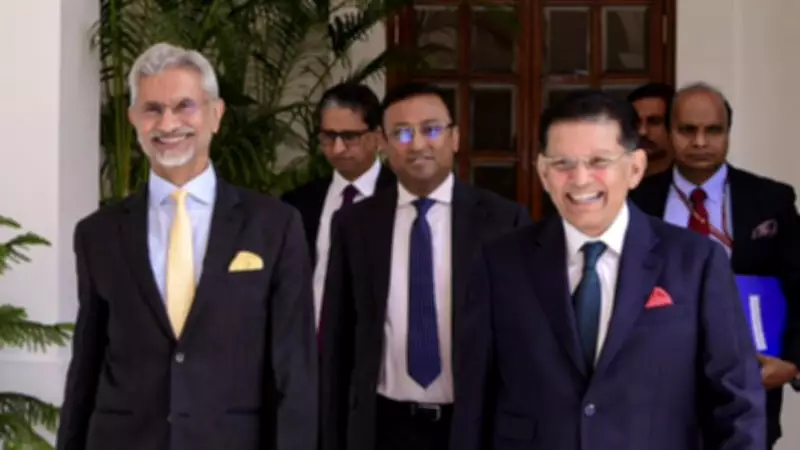
India and Bangladesh Signal Strategic Reset to Strengthen Bilateral Relations
In a significant diplomatic development, External Affairs Minister S Jaishankar and Bangladesh's Foreign Minister Hasan Mahmud convened a crucial meeting aimed at revitalizing and reinforcing the strategic partnership between the two neighboring nations. The high-level discussions marked a deliberate effort to chart a new course of cooperation, effectively moving beyond a period of heightened diplomatic strain that characterized relations over the past year and a half.
Deliberations Focus on Forging a New Path Forward
The ministers engaged in extensive and comprehensive deliberations, exploring multiple avenues to enhance collaboration across various sectors. Their conversation was strategically oriented towards establishing a robust framework for future engagement, with both sides expressing a firm commitment to deepening ties. This meeting is seen as a pivotal step in resetting the bilateral relationship, which had experienced notable tensions during the tenure of Bangladesh's interim government.
The diplomatic reset comes after more than 18 months of strained interactions, during which several issues led to a cooling of relations. The interim government in Bangladesh, which oversaw the country during a transitional phase, was involved in diplomatic exchanges that often highlighted disagreements rather than common ground. However, the current administration under Prime Minister Sheikh Hasina has shown a renewed willingness to engage constructively with India, recognizing the mutual benefits of a strong partnership.

Key Areas of Discussion and Cooperation
During their meeting, Jaishankar and Mahmud identified several critical areas for enhanced cooperation, including:
- Trade and economic partnerships to boost bilateral commerce and investment flows.
- Security collaboration to address shared concerns and promote regional stability.
- Connectivity projects, such as infrastructure development and cross-border transport links.
- Cultural and people-to-people exchanges to strengthen societal bonds.
Both ministers emphasized the importance of building on historical ties and leveraging geographical proximity to foster greater integration. They acknowledged that a stable and prosperous relationship is vital not only for their respective countries but also for the broader South Asian region.
Moving Beyond Past Tensions
The decision to leave behind the diplomatic tensions of the recent past underscores a mutual recognition of the strategic imperative to collaborate. The interim government period in Bangladesh saw several contentious issues, including border disputes and trade imbalances, which occasionally escalated into public disagreements. However, the current dialogue reflects a mature approach to diplomacy, focusing on resolution and forward-looking initiatives.
This meeting signals a clear intent from both India and Bangladesh to prioritize long-term partnership over short-term disagreements. By committing to a renewed path of cooperation, they aim to create a more predictable and positive bilateral environment. The discussions are expected to pave the way for future high-level visits and joint initiatives, further solidifying the foundation of their relationship.
In conclusion, the Jaishankar-Mahmud meeting represents a strategic reset in India-Bangladesh relations, with both nations demonstrating a strong commitment to strengthening ties. As they move forward, the focus will likely remain on practical cooperation and mutual growth, ensuring that the partnership continues to evolve in a constructive and beneficial manner for both sides.