

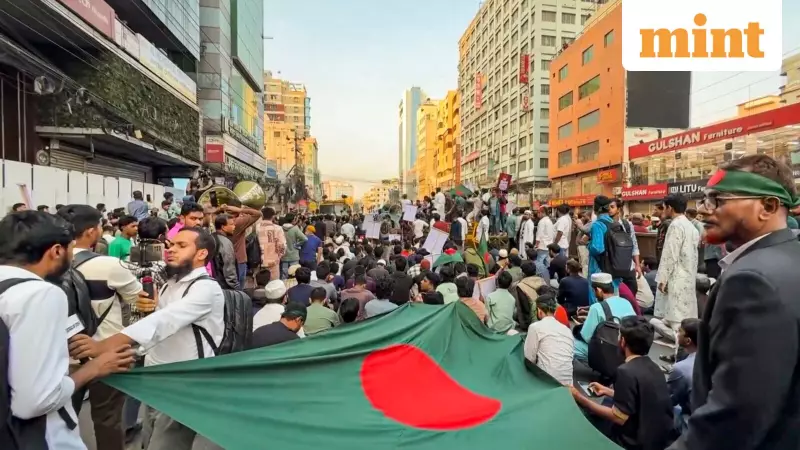
The closure of two Indian Visa Application Centres (IVACs) in Bangladesh entered its second day on Thursday, 19 December 2025, as diplomatic tensions between the two neighbours escalate. The move follows a series of security concerns that have prompted India to lodge a formal protest with Dhaka.
Visa Centers Shut Amid Security Alert
Authorities announced the temporary closure of the IVACs in Rajshahi and Khulna on Wednesday, 18 December. The State Bank of India (SBI), which is the sole authorised agency for processing Indian visa applications in Bangladesh, issued a notice citing the "ongoing security situation" as the reason. The notice assured that all applicants with booked appointments would be rescheduled for a later date.
This was preceded by the early closure of the IVAC located in Dhaka's Jamuna Future Park at 2 PM on Tuesday, 17 December, for the same security reasons. India operates a network of 16 visa centres across Bangladesh, which collectively handle a staggering 22 lakh (2.2 million) visa applications annually. The closures directly impact thousands of Bangladeshi nationals seeking to travel to India.

Diplomatic Protests and Summons
The shuttering of the visa centres comes in the backdrop of a sharp diplomatic exchange. India summoned Bangladesh's High Commissioner to New Delhi, Muhammad Riaz Hamidullah, to register a strong protest. The Ministry of External Affairs (MEA) expressed concern over recent threats to the Indian High Commission in Dhaka and inflammatory anti-India statements made by certain Bangladeshi political leaders.
In an official statement, the MEA rejected what it called a "false narrative" being propagated by extremist elements in Bangladesh. It expressed disappointment that the interim government in Dhaka had not conducted a thorough investigation or shared evidence with India regarding the incidents. The statement emphasised India's expectation that the Bangladeshi government uphold its diplomatic obligations to ensure the safety of Indian missions.
In a reciprocal move, Dhaka also summoned Indian High Commissioner to Bangladesh, Pranay Verma, to discuss the issue.
Roots of the Rising Tensions
The current friction appears to be fueled by a wave of anti-India rhetoric from some quarters in Bangladesh. Political leaders have been accused of making provocative statements targeting India's sovereignty. Notably, a leader from the National Citizen Party (NCP), Hasnat Abdullah, recently threatened at a rally that Dhaka would support forces to sever India's northeastern states, referred to as the "Seven Sisters," from the country.
These remarks, along with attempts to blame India for an attack on student leader Sharif Osman Hadi, have been firmly rejected by New Delhi. India has categorically stated that it "never allowed its territory to be used for activities inimical to the interests of the friendly people of Bangladesh."
The MEA reiterated India's long-standing and friendly ties with the people of Bangladesh, rooted in the 1971 Liberation War. It also affirmed India's support for "free, fair, inclusive, and credible elections" conducted peacefully in Bangladesh. The closure of vital visa services underscores the tangible impact of diplomatic strains on people-to-people connectivity, a cornerstone of the bilateral relationship.






