

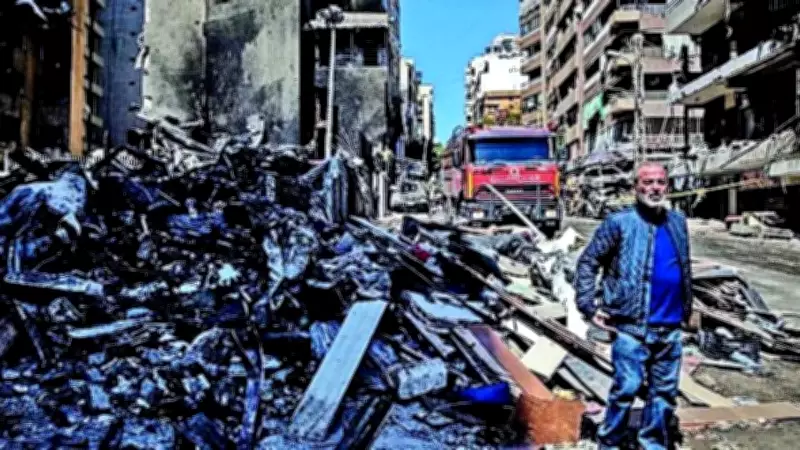
India Voices Deep Concern Over Civilian Casualties in Lebanon Strikes
Amid growing international outrage over recent aerial attacks on Lebanon, India has officially expressed profound concern regarding the significant number of civilian casualties resulting from these strikes. The attacks, which reportedly claimed over 300 lives, occurred shortly after a two-week ceasefire agreement between the United States and Iran was announced on Wednesday.
Official Statement from Ministry of External Affairs
The Ministry of External Affairs (MEA) responded to media queries by stating that as a troop-contributing country to the United Nations Interim Force in Lebanon (UNIFIL), India is deeply invested in Lebanon's peace and security. The ministry described the current direction of events as very disturbing, though it notably did not explicitly name Israel in its statement.
The ceasefire agreement has come under considerable strain due to confusion over whether Lebanon is included in the deal. While Israel maintains that Lebanon is not part of the ceasefire arrangement, Iran has characterized the attacks as a blatant violation of the agreement.

India's Position on Civilian Protection
MEA spokesperson Randhir Jaiswal emphasized India's longstanding position on civilian protection, stating: "India has always emphasised the protection of civilians as the foremost priority. Observing international law and respecting sovereignty and territorial integrity of states is essential."
Jaiswal further confirmed that the Indian embassy in Lebanon remains in close contact with the Indian community to ensure their safety and security during this volatile period.
Background on the Ceasefire and Regional Dynamics
India had previously welcomed the temporary ceasefire between the US and Iran, expressing hope that it would facilitate freedom of navigation through the strategically vital Strait of Hormuz and contribute to lasting peace in the region.
Meanwhile, diplomatic efforts continue as Pakistan prepares to host talks between the United States and Iran on Saturday aimed at securing the fragile ceasefire. US Vice-President J.D. Vance, en route to Pakistan for these negotiations, expressed optimism about the upcoming discussions while issuing a stern warning to Tehran.
"As the President of the US said, if the Iranians are willing to negotiate in good faith, we're certainly willing to extend the open hand. If they're going to try to play us, then they're going to find the negotiating team is not that receptive," Vance stated.
Israeli Position and Regional Implications
In a related development, Israeli Prime Minister Benjamin Netanyahu announced on Thursday that Israel stands ready to initiate negotiations with Lebanon. The proposed talks would focus on disarming Hezbollah and establishing peaceful relations between the two nations.
The situation remains fluid with multiple diplomatic tracks unfolding simultaneously. India's statement reflects its growing role as a concerned stakeholder in Middle Eastern stability, particularly given its contributions to UN peacekeeping missions in the region and its substantial diaspora community in Lebanon.






