

West Asia Airspace Closure Sends India-Europe-US Airfares Soaring to Record Highs
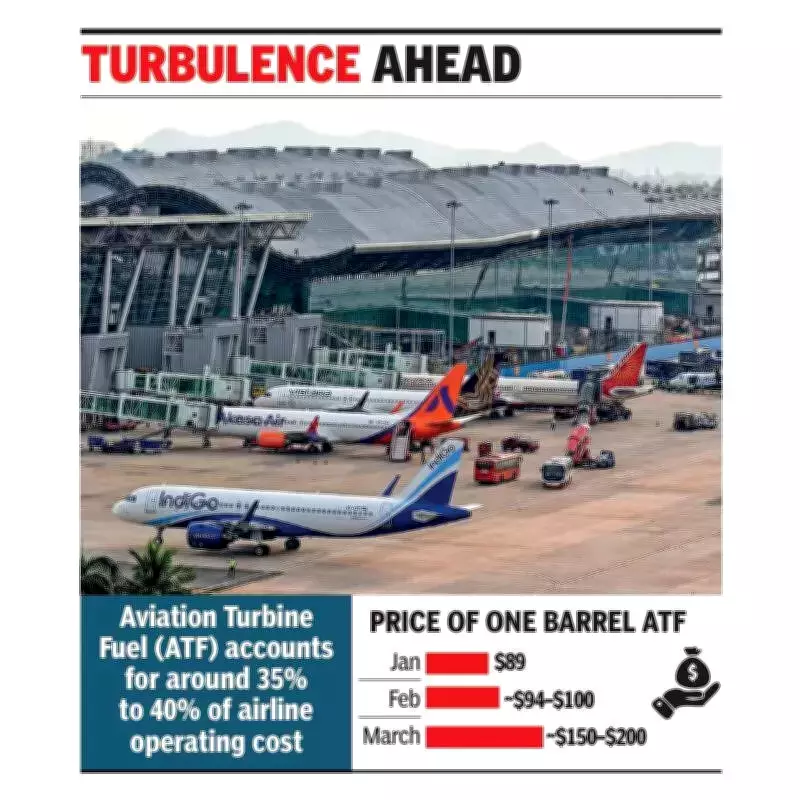
The closure of airspace across parts of West Asia, triggered by escalating regional tensions, has caused airfares from India to Europe and the United States to skyrocket to unprecedented levels. Airlines are forced to reroute flights along longer, circuitous paths to avoid conflict zones, while simultaneously paying steep premiums for aviation turbine fuel (ATF). This dual pressure has resulted in dramatic fare increases, severely impacting travelers and businesses alike.
Travelers Stranded and Businesses Crippled by Soaring Costs
Travelers stranded abroad or those needing to rush home for official duties and personal emergencies are finding the fivefold fare hikes unaffordable. Sidharth Sridharan, a Chennai resident who runs a software firm in the US, reported that the surge has crippled his business operations. He and his employees can no longer afford trips to meet clients or attend marketing events.
"My team members and I travel to the US at least once a month," Sridharan said. "The economy fares, usually around 85,000 to 1.2 lakh, rose to 3.8 lakh to 4 lakh over the last two weeks." At least four flights they booked through West Asia carriers—some still advertised below 1 lakh—were abruptly cancelled, compounding the disruption.

Beyond work issues, Sridharan noted that friends in the US couldn't fly to India even for emergencies such as a family member's death. Others who reached home were forced to shell out exorbitant sums to return. D Karunanidhi, a Chennai-based travel agent, said working professionals visiting India were forced to cut trips short and faced extortionate prices.
"Recently, we arranged a flight ticket for a World Bank chartered accountant for 3.85 lakh," Karunanidhi said. "Economy fares to the US have surged up to 4.8 lakh. Travel between metro cities for work is also on the decline."
Operational Strains and Extended Flight Times
Mohan Chandramouli, a retired manager at Air India, defended the airlines' fuel surcharges, citing significant operational strains. Some long-haul flights are now flying an extra eight hours due to rerouting. "Flights from Delhi to the US, which should ideally fly for 14 hours over Pakistan and Iran's airspace, are now rerouted to Gujarat with a halt in Rome for crew rest and fuel," he explained. Chandramouli warned that those heading abroad for studies will suffer the most from these disruptions.
Policy Solutions Proposed to Mitigate Crisis
Captain Mohan Ranganathan, a Chennai-based civil aviation safety consultant, proposed a policy fix to alleviate the burden. He urged the Union government to waive customs duty on excess fuel carried by international flights landing in India during such crises.
"Now, flights cannot carry fuel beyond the permitted quantum and must pay customs duty in advance," Ranganathan said. "If that practice is relaxed during crises such as this, the same flight could operate a domestic leg and save significantly on fuel charges." This measure could help reduce operational costs and potentially lower fares for passengers.
The ongoing airspace closures highlight the fragile nature of global aviation networks in times of geopolitical conflict, with immediate and severe consequences for international travel and commerce.






