

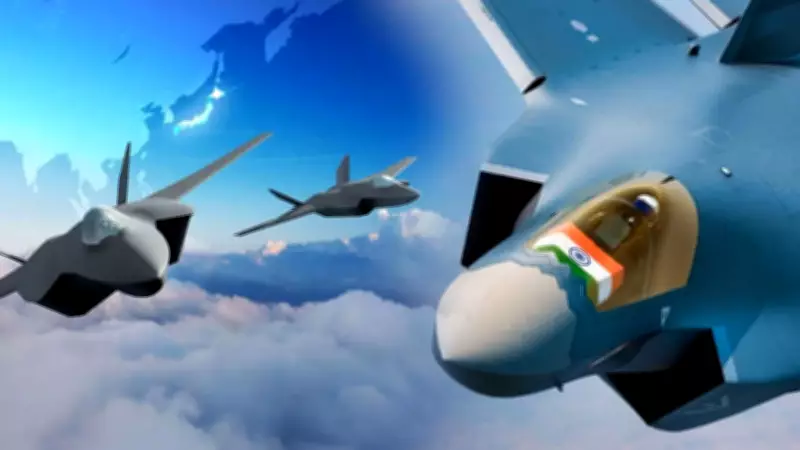
India's Strategic Move to Join Sixth-Generation Fighter Programs
In a significant parliamentary disclosure, India's Ministry of Defence has informed the Parliamentary Standing Committee on Defence that the Indian Air Force is actively exploring membership in one of two major European sixth-generation fighter aircraft programs. This strategic initiative aims to ensure India does not lag in the upcoming sixth-generation aviation era, marking a pivotal shift in its defense procurement philosophy.
Two Contenders: GCAP vs. FCAS
The options under consideration are the Global Combat Air Programme (GCAP), led by the United Kingdom, Italy, and Japan, and the Future Combat Air System (FCAS), spearheaded by France and Germany. Each program presents distinct advantages and challenges for India, as detailed in the MoD's submission.
The GCAP program is noted for its greater stability, with a demonstrator aircraft scheduled to fly in 2027 and entry into service projected from 2035. It has been described as a potential non-US alternative to the F-35, especially relevant as geopolitical shifts under the Trump era drive allies toward European options. However, workshare arrangements among the UK, Italy, and Japan are already settled, meaning India would likely face an off-the-shelf purchase scenario rather than developmental participation, unless a specific industrial role can be negotiated.

In contrast, the FCAS path offers India potentially greater industrial rewards. This includes possible collaboration on a deck-based fighter variant, which is directly relevant to India's expanding carrier aviation program. However, FCAS is currently facing deeper challenges, with France and Germany at an impasse over industrial workshare on critical components like the airframe and flight control systems.
Financial and Strategic Implications
The financial commitment required for participation is substantial. A 10 percent stake in either program would likely demand between $6.5 billion and $7.5 billion, with costs rising to over $10 billion for a 15 percent stake, sustained over a period of 15 to 20 years. This raises critical questions about India's ability to balance such investments with its domestic defense priorities.
At the heart of this decision lies the tension with India's own Advanced Medium Combat Aircraft (AMCA), the nation's indigenous fifth-generation stealth fighter program. Expected to enter service around 2035, the AMCA is the centerpiece of India's Aatmanirbharta (self-reliance) aviation ambition. The MoD's analysis suggests that India is unlikely to be able to simultaneously pursue a genuine indigenous fifth-generation program and actively participate in a foreign sixth-generation one, due to financial, industrial, and strategic focus constraints.
If the AMCA delivers on schedule, the case for spending billions on a foreign sixth-generation program weakens. Conversely, if the AMCA faces further delays, the argument for locking in sixth-generation access through a European partnership grows stronger. This delicate balance underscores the strategic calculus behind India's exploration.
A New Level of Ambition
What sets this parliamentary declaration apart is its ambition. India is not merely discussing the purchase of the next generation of fighter aircraft; it is contemplating a role in helping to build it. This represents a shift from traditional buyer-seller relationships to potential collaborative development, aligning with broader goals of technological advancement and industrial capability enhancement.
As the MoD continues its evaluation, the decision will hinge on factors such as industrial participation opportunities, financial viability, and alignment with India's long-term defense and self-reliance objectives. The outcome could significantly influence India's position in global aerospace and its strategic autonomy in the decades to come.






