

In a significant diplomatic move reflecting strained bilateral ties, India has halved its development assistance to Bangladesh, reducing it to ₹60 crore in the Union Budget for 2026-27. This substantial cut comes amid frosty relations between the two neighbouring nations, with Bhutan emerging as the largest recipient of India's aid, receiving a substantial allocation of ₹2,288 crore.
Budget 2026-27: A Shift in Foreign Aid Priorities
Finance Minister Nirmala Sitharaman presented the Union Budget 2026-27 in Parliament on Sunday, outlining India's foreign aid distribution that reveals shifting priorities in the neighbourhood. Following Bhutan's substantial allocation, Nepal receives ₹800 crore, while both the Maldives and Mauritius are allocated ₹550 crore each in development assistance.
The Ministry of External Affairs (MEA) has been allocated a total of ₹22,118 crore for the upcoming fiscal year. This represents an increase from the current fiscal year's budget estimate of ₹20,516 crore and the revised estimate of ₹21,742 crore, indicating continued emphasis on diplomatic engagements despite specific bilateral challenges.

Strained India-Bangladesh Relations: The Context
The 50% reduction in development assistance to Bangladesh occurs against the backdrop of significantly strained bilateral relations. The political landscape shifted dramatically following the ouster of the Awami League regime on 5 August 2024, accompanied by concerning reports of violence against minorities, particularly affecting the Hindu community in Bangladesh.
Simultaneously, Dhaka's diplomatic orientation has shown a noticeable pivot toward improved relations with Pakistan, marking a significant departure from historical patterns, especially considering the tumultuous history during the 1971 liberation struggle.
Diplomatic Measures and Security Concerns
India has implemented several precautionary measures in response to the evolving situation in Bangladesh. These include restricting tourist visas for Bangladeshi citizens and, more recently, withdrawing families of Indian diplomats from Bangladesh. These decisions were made citing security concerns ahead of the crucial 12 February elections in the neighbouring country.
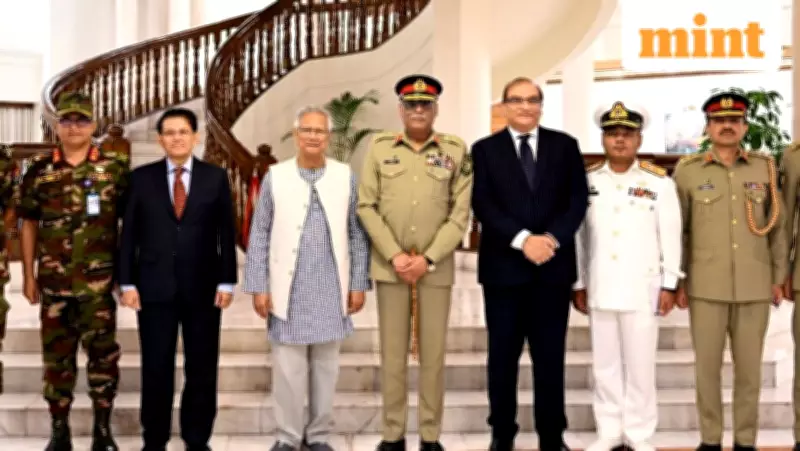
The current Bangladesh administration, led by Chief Advisor Muhammad Yunus, has been actively pursuing closer ties with Pakistan. This diplomatic reorientation was highlighted during the D-8 Summit in Cairo, Egypt, on 19 December 2024, where Yunus met with Pakistan's Prime Minister Shehbaz Sharif. During their meeting, Yunus urged resolution of outstanding issues dating back to 1971, to which Sharif responded by describing their exchange as "warm and cordial."
Sports Diplomacy Affected: Cricket Tensions
The diplomatic strain has extended beyond traditional political channels to affect sports relations between the two nations. Last month, Bangladesh withdrew from the men's T20 World Cup after the International Cricket Council declined their request to move group matches from India to co-hosts Sri Lanka.
This cricketing dispute has deeper roots in a long-running political row that was triggered by Kolkata Knight Riders' decision to remove Bangladeshi bowler Mustafizur Rahman from their Indian Premier League squad. The sports tension has created ripple effects across the region, with Pakistan's national cricket team reportedly receiving government approval to participate in the upcoming T20I World Cup 2026, but with specific instructions not to play against tournament hosts India.
The much-anticipated India versus Pakistan clash was originally scheduled for 15 February in Colombo, with India and Sri Lanka co-hosting the T20 World Cup this month. Pakistan's participation in the tournament faced uncertainty following Bangladesh's withdrawal, highlighting how diplomatic tensions can significantly impact international sporting events.
MEA's Stance on Minority Protection in Bangladesh
On 29 January, the Ministry of External Affairs informed the Rajya Sabha that the Indian government "continues to monitor" reports of attacks against minorities in Bangladesh. These concerns extend to threats against homes, properties, businesses, and places of worship belonging to minority communities.

Minister of State for External Affairs Kirti Vardhan Singh stated that "India has consistently raised the matter of safety and security of the minorities with the authorities in Bangladesh, at both political and diplomatic levels on several occasions." This ongoing diplomatic engagement underscores India's commitment to addressing humanitarian concerns while navigating complex bilateral relations.
India's 'Neighbourhood First' Policy Framework
India's external aid distribution to neighbouring countries operates within the framework of its 'neighbourhood first' policy, which prioritizes infrastructure development, connectivity enhancement, and developmental projects to strengthen regional ties. This strategic approach represents India's commitment to fostering close cooperation with neighbouring nations for mutual growth and enhanced security.
Key Objectives of the Neighbourhood First Policy
- Strengthening regional connectivity through comprehensive development of roads, railways, ports, and energy links
- Boosting trade and economic cooperation across borders
- Promoting people-to-people ties through cultural exchanges and streamlined travel procedures
- Supporting development projects in neighbouring countries
- Enhancing security cooperation, particularly against terrorism and cross-border crime
- Countering strategic influence of other powers, especially China, in the region
Notable initiatives under this policy have included infrastructure and aid projects in Nepal, Bhutan, Sri Lanka, and Bangladesh, vaccine and medical assistance during the COVID-19 pandemic, and consistent disaster relief and humanitarian support to neighbours during times of crisis.
Comparative Aid Allocations: Regional Perspective
The budgetary allocation for Bangladesh in the upcoming fiscal year stands at ₹60 crore, representing a significant reduction from the ₹120 crore allocated for 2025-26, though the revised estimate for that year was ₹34.48 crore. In contrast, Bhutan received ₹1,950 crore according to revised estimates for 2025-26, highlighting the substantial disparity in aid distribution.
In continuation of India's special and improving relationship with Afghanistan, an allocation of ₹150 crore has been made to that country. This follows India's diplomatic upgrade with Afghanistan's Taliban administration in October 2025, when New Delhi announced it would reopen its embassy in Kabul that had been shut after the Taliban seized power in 2021.
The Afghan Taliban administration has agreed to send diplomats to New Delhi, as decided during talks between Foreign Minister S. Jaishankar and his Taliban counterpart, Amir Khan Muttaqi, who visited India on a six-day trip after receiving a temporary exemption from his travel ban.
Other Regional Allocations
Sri Lanka has been allocated ₹400 crore in development assistance, while Myanmar receives ₹300 crore in the Budget 2026-27. The total assistance earmarked for Latin American countries in the upcoming fiscal year has been pegged at ₹120 crore, indicating India's broader global engagement beyond immediate neighbours.
India's budgetary allocations for foreign aid reflect a nuanced approach to international relations, balancing strategic interests, humanitarian concerns, and regional stability considerations. The significant reduction in assistance to Bangladesh, juxtaposed with substantial allocations to other neighbours, underscores how diplomatic relations directly influence development cooperation in South Asia.





