India and Indonesia Vow Zero Tolerance Against Terrorism
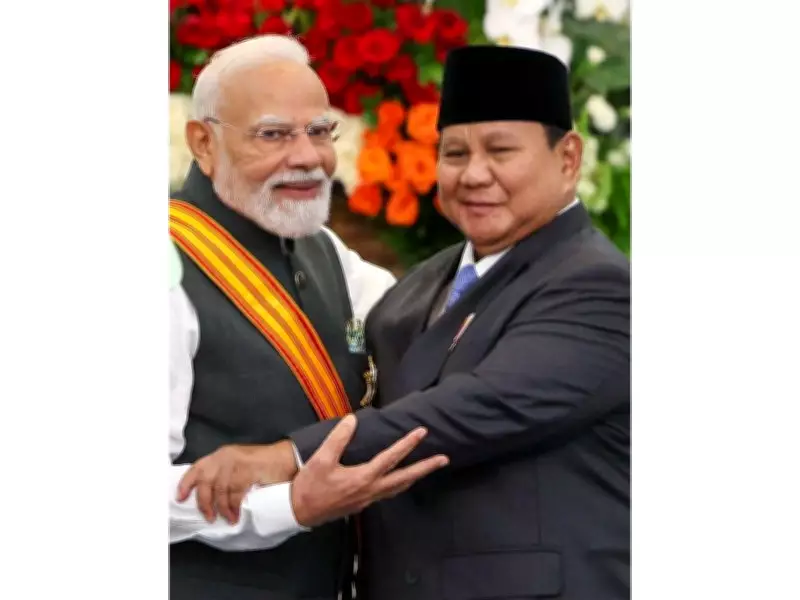
India and Indonesia have unequivocally condemned terrorism in all its forms and called for decisive international efforts to combat it comprehensively and sustainably, in line with international law. In a joint statement issued after talks between Prime Minister Narendra Modi and Indonesian President Prabowo Subianto, both nations demanded action against globally proscribed terrorists and entities listed under the UNSC 1267 Sanctions Committee.
Enhanced Counter-Terrorism Cooperation
The leaders agreed to strengthen cooperation in preventing and countering terrorism and violent extremism. This includes efforts to counter terrorist financing, promote anti-money laundering and counter-financing of terrorism (AML/CFT) standards, prevent misuse of new technologies for terrorist purposes, and address online recruitment and radicalization. They also committed to a zero-tolerance approach, disrupting terror financing channels, and bolstering bilateral and multilateral cooperation within the UN and FATF.
Recognizing links between terrorism and transnational organized crime, both sides agreed to enhance information sharing and best practices. They welcomed the early conclusion of a Memorandum of Understanding (MoU) on Counter Terrorism cooperation, to be signed soon.

Concerns Over West Asia and Maritime Security
The leaders expressed deep concern over the situation in West Asia and its global effects. They welcomed an MoU signed on June 17, 2026, emphasizing de-escalation and resolution through dialogue. They also underscored respect for freedom of navigation and global commerce, particularly transit passage through the Strait of Hormuz, in accordance with UNCLOS.
Security Dialogue and Cyber Cooperation
Both sides welcomed the planned 3rd India-Indonesia Security Dialogue (IISD) to comprehensively discuss security issues, including counter-terrorism, organized crime, emerging technology, cybersecurity, defense industry, maritime, and space cooperation. They also agreed to explore cyber domain cooperation through policy dialogue, capacity building, and exchanges on digital public infrastructure, fintech, AI, digital forensics, and CERT collaboration.
Economic and Trade Synergies
PM Modi and President Prabowo highlighted economic cooperation as a key pillar of bilateral ties. They acknowledged synergies between India's 'Viksit Bharat 2047' and Indonesia's 'Indonesia Emas 2045' visions. Both expressed desire for timely conclusion of the ASEAN-India Trade in Goods Agreement (AITIGA) review and deeper bilateral trade engagement.
They emphasized utilizing existing mechanisms like the Working Group on Trade and Investment (WGTI), Trade Ministers' Forum (BTMF), and Joint Economic and Financial Dialogue (EFD) to address tariff and non-tariff issues, improve market access, and advance cooperation in finance, digital economy, and supply chains.
Critical Minerals and Rare Earths Collaboration
Both leaders underscored strengthening collaboration in critical minerals and rare earths to build resilient supply chains. They welcomed an MoU between India's Non-Ferrous Materials Technology Development Centre (NFTDC), Midwest Ltds., and Indonesia's PT. Perusahaan Mineral Nasional (PERMINAS).
Bilateral Documents and Parliamentary Exchanges
PM Modi invited President Subianto to visit India. The talks covered political engagement, defense, maritime cooperation, trade, digital economy, science, space, critical minerals, energy, agriculture, health, education, culture, tourism, and people-to-people ties. Several bilateral documents were exchanged to strengthen the Comprehensive Strategic Partnership.
Both leaders welcomed the establishment of India-Indonesia Parliamentary Friendship Groups and enhanced parliamentary exchanges.
Global and Regional Cooperation
Both sides underscored the need for strategic convergence in multilateral forums like the UN, BRICS, G20, and IORA. They reaffirmed respect for sovereignty, territorial integrity, cultural diversity, pluralism, and the rule of law. They acknowledged South-South Cooperation and agreed to strengthen the voice of the Global South.

They called for meaningful reforms of international institutions, including UN Security Council expansion in both permanent and non-permanent categories, through inclusive intergovernmental negotiations. They also discussed mutual support for international candidatures.
Indo-Pacific Vision and ASEAN Centrality
Both leaders reaffirmed commitment to a free, open, transparent, rules-based Indo-Pacific region, respecting sovereignty, international law, and freedom of navigation. President Prabowo appreciated India's support for ASEAN Unity and Centrality. They encouraged synergies between ASEAN Outlook on the Indo-Pacific (AOIP) and India's Indo-Pacific Oceans Initiative (IPOI).
They welcomed cooperation through the India-Indonesia-Australia trilateral mechanism, focusing on maritime domain awareness, marine pollution, blue economy, and frameworks like the East Asia Summit (EAS) and IORA.
They acknowledged the need for reforms in global financial architecture and a rules-based WTO-centric trading system. Indonesia reaffirmed support for India's 2026 BRICS Chairship, and India supported Indonesia's role as a BRICS member.