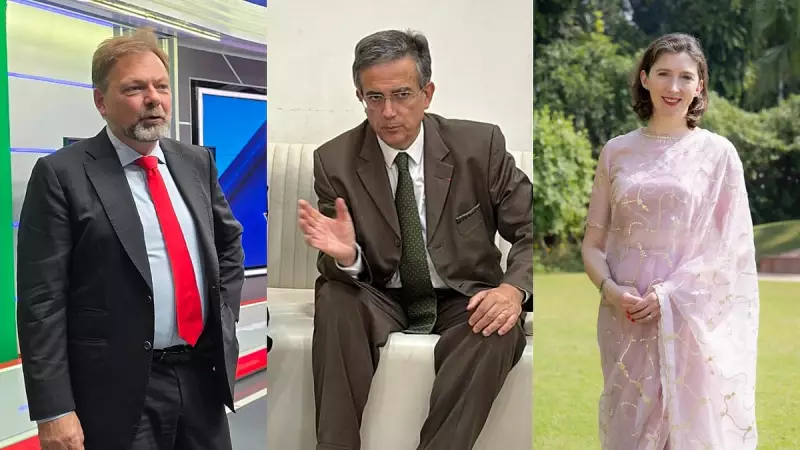
The Indian government has reportedly expressed its strong displeasure over a recent newspaper article authored jointly by the ambassadors of Germany, France, and the United Kingdom. The article, which called for Russia to halt its military campaign in Ukraine, has sparked a diplomatic reaction from New Delhi, which values its longstanding strategic ties with Moscow.
The Controversial Publication and Its Authors
The opinion piece appeared in a leading Indian newspaper on Monday, December 1, 2025. It was co-authored by Dr. Philipp Ackermann, the German Ambassador to India; Thierry Mathou, the French Ambassador; and Lindy Cameron, the British High Commissioner to India.
In the article, the three senior European diplomats argued that Russia must cease the indiscriminate bombing of Ukrainian cities. They described Moscow's ongoing invasion as not merely a humanitarian catastrophe but also a direct assault on fundamental international principles, with a specific emphasis on the violation of territorial integrity.
Ambassador Ackermann also shared the article on his official social media account on platform X (formerly Twitter) on the same day, amplifying its reach and message to a global audience.
India's Diplomatic Response
Sources indicate that the Indian side was not pleased with the public intervention by the ambassadors. New Delhi is understood to have conveyed its irritation through diplomatic channels. The core of India's concern lies in the perception that the envoys used an Indian media platform to advance a geopolitical narrative that directly criticizes a key Indian partner, Russia.
This incident highlights the delicate diplomatic balancing act India has maintained since the conflict in Ukraine began. While urging for a peaceful resolution, India has not condemned Russia's actions and has continued its robust economic and defense cooperation with Moscow. The public call by Western envoys is seen by observers as an attempt to sway Indian public opinion and policy, a move that has evidently backfired.
Broader Implications for Bilateral Relations
The episode underscores the ongoing friction between India and some of its Western partners regarding the Ukraine conflict. While India enjoys deepening ties with the US, France, Germany, and the UK in various domains, fundamental differences on Russia remain a persistent point of contention.
India's stance is rooted in its own strategic autonomy and historical relationship with Russia, a major defense supplier and a permanent member of the UN Security Council. New Delhi has consistently emphasized dialogue and diplomacy as the only path to peace, resisting external pressure to align its position with that of the Western bloc.
The article and the subsequent Indian reaction demonstrate that despite strong partnerships, such public advocacy on divisive issues can strain diplomatic interactions. It reaffirms India's firm stance against what it views as external narratives being pushed onto its domestic discourse, especially when they concern a sensitive foreign policy matter.