

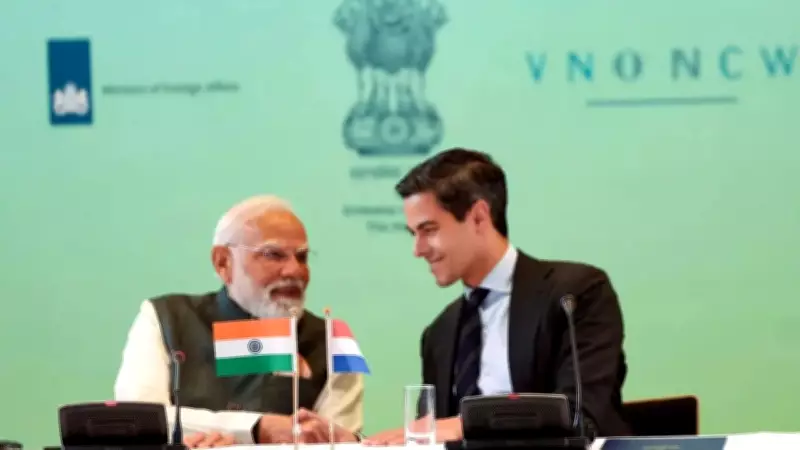
NEW DELHI: India and the Netherlands elevated their bilateral relationship to a strategic partnership as Prime Minister Narendra Modi concluded his two-day visit to The Hague on Saturday. During the visit, PM Modi and his Dutch counterpart, Prime Minister Rob Jetten, signed 17 agreements to boost cooperation in defence, critical minerals, and other key sectors.
Strategic Partnership Roadmap
Following the talks between PM Modi and PM Jetten, India and the Netherlands unveiled a 'Strategic Partnership Roadmap for 2026-2030' to enhance ties in trade and investment, defence and security, and critical and emerging technologies including semiconductors, space, artificial intelligence, and quantum computing. The roadmap is expected to boost investments, create jobs, and strengthen supply-chain resilience.
Key Outcomes of the Visit
The Ministry of External Affairs listed 17 key outcomes from PM Modi's visit. Here are the highlights:


- Restitution of Chola Copper Plates: Chola-era artefacts will be returned to India, strengthening cultural preservation and historical research.
- Mobility and Migration Cooperation: Easier visa norms for Indian students and professionals, with more internship, study, and long-term work opportunities in the Netherlands.
- Tata Electronics-ASML Cooperation: A key step for the semiconductor fab project in Dholera, Gujarat, supporting India's semiconductor manufacturing ambitions.
- Cooperation in Critical Minerals: Aims to strengthen supply chains and attract investment, expected to improve India's mining and processing capabilities.
- Technical Cooperation for Kalpasar Project: Dutch expertise will support Gujarat's mega water infrastructure project, creating a freshwater reservoir for drinking water, irrigation, and industry.
- Green Hydrogen Roadmap: Expands India's green hydrogen export opportunities in Europe, attracting investments and creating high-skilled jobs.
- Joint Working Group on Renewable Energy: Focus on clean energy expansion and technology sharing, creating opportunities in green industries.
- Energy Transition Cooperation with NITI Aayog: Joint projects on cleaner and diversified energy systems, focusing on energy security, innovation, and green jobs.
- Indo-Dutch Centre of Excellence for Flowers in West Tripura: Promotes floriculture and export opportunities, expected to improve farmer incomes and regional development.
- Indo-Dutch Dairy Training Centre in Bengaluru: Focus on modern dairy practices and skill development, aiming to improve dairy productivity and farmer earnings.
- Cooperation in Animal Husbandry and Dairying: Includes training, internships, and disease-control initiatives, strengthening livestock health and dairy quality.
- Health Collaboration Arrangement: Focus on public health research and scientific exchanges, improving preparedness for future health challenges.
- Customs Mutual Administrative Assistance Agreement: Facilitates smoother and safer bilateral trade, focusing on revenue protection and fair trade practices.
- Cooperation in Higher Education: More joint degree programmes and academic exchanges, improving research output and skill development.
- Cooperation between Nalanda University and University of Groningen: Focus on student exchanges and collaborative research, strengthening international academic partnerships.
- Collaboration between Leiden University Libraries and the Archaeological Survey of India: Focus on Chola history research and cultural preservation, strengthening India's cultural diplomacy and heritage awareness.





