

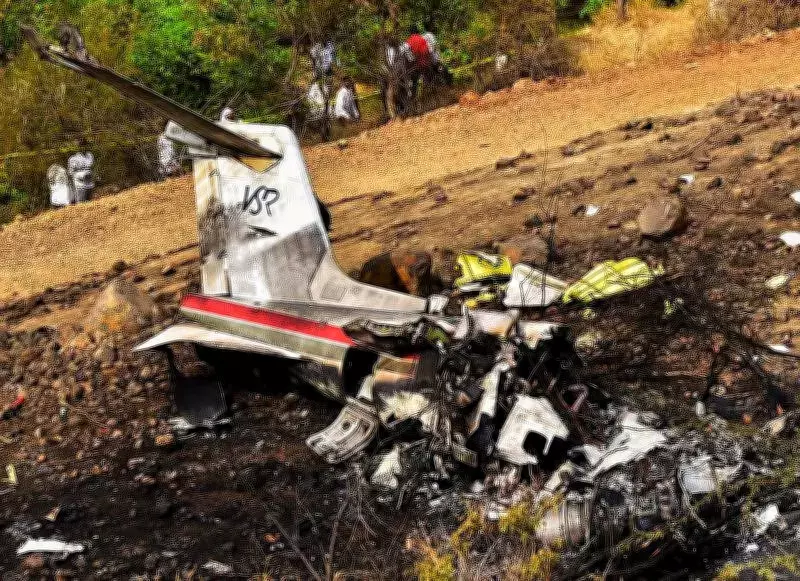
India Launches Nationwide Safety Review of Uncontrolled Airstrips
The Union Ministry of Civil Aviation (MoCA), in close coordination with state governments and other key stakeholders, is actively discussing plans for a comprehensive review and safety inspection of all uncontrolled airstrips across the country, according to sources familiar with the matter. This initiative gains urgency following the tragic plane crash near Baramati airport on January 28, which claimed the lives of Maharashtra Deputy Chief Minister Ajit Pawar and four other individuals.
Rising Demand for Aviation Safety Overhaul
In the aftermath of the Baramati tragedy, aviation experts have been vocal in demanding rigorous checks on uncontrolled airstrips and the operational standards of Flight Training Organizations (FTOs). Baramati airport itself is an uncontrolled facility managed by the Maharashtra Airport Development Company Limited (MADC). Despite featuring a table-top runway, it operates without an Instrument Landing System (ILS) or a proper Air Traffic Control (ATC) setup.
Sources indicate that inspections are expected to commence shortly, covering all aspects of these airstrips. The review will identify deficiencies and propose corrective measures for implementation. "The plan is currently under discussion. Since many of these facilities fall under state jurisdiction, their cooperation is essential, alongside coordination with other relevant agencies," explained a source close to Minister of State for Civil Aviation, Murlidhar Mohol.

Understanding Uncontrolled Airstrips in India
An uncontrolled airstrip is defined as a landing facility that lacks permanent air traffic control, specialized navigational aids, and dedicated emergency services. India is home to approximately 400 such airstrips, with a significant concentration located in Maharashtra.
Aviation expert Sanjay Lazar, CEO of Avialaz Consultants, emphasized the critical need for attention to these facilities. "Maharashtra has three primary uncontrolled airstrips under MADC: Baramati, Karad, and Chandrapur (Morwa). Additionally, MADC oversees 15 unlicensed or general aviation airstrips without ATC, including Nanded, Yavatmal, Latur, Dharashiv, Amravati, Ratnagiri, Solapur, Akola, Dhule, Phaltan, and Kalyan," he stated.
Lazar further noted, "With 400 uncontrolled airstrips nationwide, a government-led inspection is a welcome development. It promises to establish much-needed control and enforce safety standards. Furthermore, Category A and B airports, often managed by local flying schools or clubs, require significant upgrades in their safety protocols."
Classification and Broader Implications
Uncontrolled airstrips typically fall under Category A and B airport classifications. Category A airports have no air traffic control whatsoever, while Category B airports offer only limited ATC services. The proposed nationwide review aims to address safety gaps across these categories, ensuring enhanced oversight and reducing risks for aviation operations, particularly in training and general aviation sectors. This move represents a significant step toward strengthening India's aviation infrastructure and safeguarding lives.






