In a clear demonstration of its delicate diplomatic balancing act, New Delhi is actively working to schedule a visit by Ukrainian President Volodymyr Zelenskyy in the coming months. This move comes hot on the heels of Russian President Vladimir Putin's high-profile two-day visit to India, which concluded on December 5, 2025.
A Carefully Calibrated Engagement with Both Sides
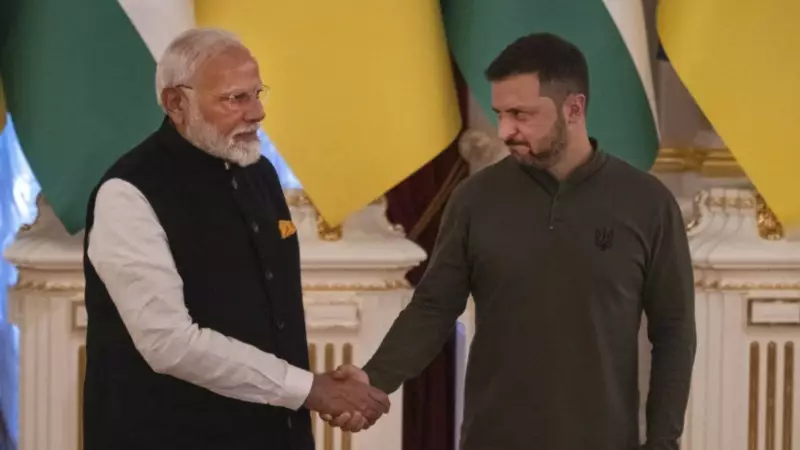
According to information obtained by The Indian Express, discussions between Indian and Ukrainian officials have been ongoing for several weeks. The proposed visit by President Zelenskyy could materialise as early as January 2026. This effort underscores India's consistent strategy of maintaining open channels with both nations embroiled in the conflict, a approach mirrored in Prime Minister Narendra Modi's travel schedule last year. In July 2024, PM Modi visited Moscow, and a month later, in August 2024, he travelled to Kyiv for a meeting with Zelenskyy.
Indian officials were in touch with Zelenskyy's office even before President Putin's arrival in Delhi. The final timing and scope of the Ukrainian leader's potential trip hinge on multiple dynamic factors. These include the evolution of former US President Donald Trump's peace initiatives, the situation on the battlefield in Ukraine, and domestic political pressures within Kyiv, where Zelenskyy's administration is currently navigating a significant corruption scandal.

"Not Neutral, On the Side of Peace": India's Consistent Mantra
Prime Minister Modi's remarks during Putin's visit echoed a stance he has articulated repeatedly. On December 5, he stated, "India has always advocated for peace regarding Ukraine. We welcome all efforts being made for a peaceful and lasting resolution of this issue." This language closely aligns with what he told President Zelenskyy in Kyiv in August 2024, when he said, "We have stayed away from the war, but we are not neutral, we are in favour of peace."
This "pro-peace, not neutral" positioning forms the cornerstone of India's diplomatic response. Since the war began in February 2022, Modi has spoken to Zelenskyy by phone at least eight times and the two leaders have met on four occasions. Their most recent conversation was on August 30, 2025, when Modi called the Ukrainian President from Tianjin, China, just before meeting Putin on the sidelines of the SCO summit.
Navigating Shifts in Language and Geopolitical Realities
A subtle but notable shift was observed during the latest Modi-Putin interactions. The two leaders referred to the Ukraine situation as a "crisis", avoiding the words "war" or "conflict". This marks a departure from Modi's direct statement to Putin in September 2022 that "this is not the era of war," and his July 2024 advice in Moscow that "solutions can’t be found on the battlefield." Furthermore, the Ukraine issue found no mention in the joint statement issued after Putin's visit.
The war's repercussions are also being felt more directly in India. The imposition of 25% penalty tariffs by the Trump administration for purchases of Russian oil has compelled New Delhi to reduce its imports of Russian crude since September 2025, responding to secondary sanctions and tariff pressures.
On the logistical front for the proposed visit, Indian diplomacy is adapting to changes in Zelenskyy's inner circle. New Delhi had been engaging with Andriy Yermak, Zelenskyy's chief of staff and a key confidant. Following Yermak's resignation this week amid the corruption scandal, Indian officials are now establishing contact with new officials in the Ukrainian President's office to finalise mutually convenient dates.
If it proceeds, a Zelenskyy visit would be a significant event in bilateral history. Ukraine's heads of state have travelled to India only three times before: in 1992, 2002, and 2012. As Europe watches India's moves closely, with envoys urging Delhi to leverage its influence with Moscow, India's complex diplomatic choreography continues, steadfastly advocating for dialogue while walking a fine line between two warring nations.