

India Firmly Rejects Pakistan's Bid to Mediate in Iran-US Tensions
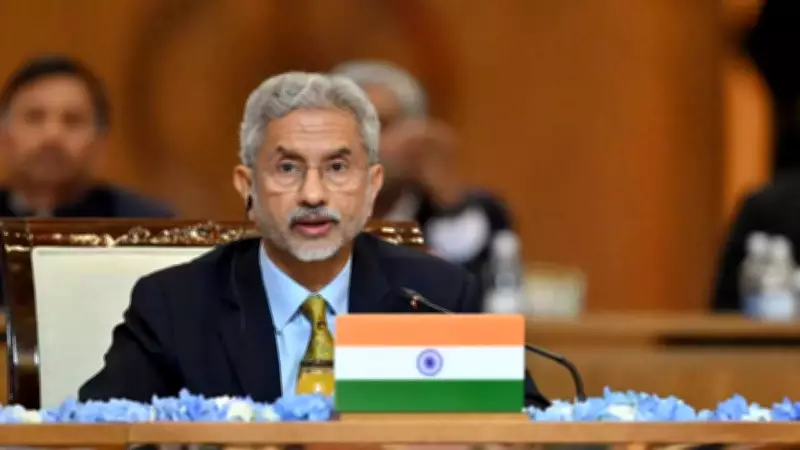
In a decisive move, the Indian government on Wednesday categorically dismissed suggestions that Pakistan has gained diplomatic ground by offering to mediate between Iran and the United States. Foreign Minister S Jaishankar, addressing an all-party meeting convened by the government, asserted that Pakistan has historically been adept at inserting itself into international conflicts, but India maintains its own strategic stance.
Jaishankar Recalls Pakistan's Past Interventions
Jaishankar pointed to specific historical instances where Pakistan acted as an intermediary. "He recalled that Pakistan served as a go-between for China and the US in 1971 and again between the US and Iran in 1981," government sources revealed. The minister was described as putting the current situation into perspective by highlighting these past interventions, rather than mocking or criticizing Pakistan's current actions regarding the Iran-US conflict.
"India cannot be a broker nation," sources quoted Jaishankar as saying during the meeting. He elaborated that India, as a large and influential country, pursues a policy of multi-alignment to best serve its national interests. This approach allows India to maintain robust relationships with various nations, including Iran, with whom ties remain strong despite regional tensions.

Modi's Conversation with Trump and India's Diplomatic Position
The foreign minister also disclosed details from Prime Minister Narendra Modi's recent conversation with US President Donald Trump. "PM Modi told President Trump that the ongoing war is causing widespread harm and stressed the urgent need for a swift resolution to the conflict," Jaishankar informed the gathering. This underscores India's active diplomatic engagement aimed at de-escalation.
Regarding the potential US-Iran talks, Jaishankar noted a lack of clarity about the format and participants. He highlighted the uncertainty over who would negotiate on Iran's behalf, pointing to the sudden emergence of parliamentary speaker Mohammad Bagher Ghalibaf as Tehran's chief negotiator as an example of the fluid situation.
Opposition Raises Concerns at All-Party Meeting
The meeting, presided over by Defence Minister Rajnath Singh, saw opposition MPs from various parties voice a range of issues. Key concerns included:
- Prime Minister Modi's visit to Israel just prior to the outbreak of hostilities.
- India's perceived silence following the assassination of Iran's supreme leader Ayatollah Ali Khamenei.
- Anxieties over the availability and supply of oil and gas amidst the conflict.
Notable attendees from the opposition included Congress's Mukul Wasnik, CPM's John Brittas, AIMIM's Asaduddin Owaisi, NCP's Supriya Sule, and AAP's Sanjay Singh. However, the Trinamool Congress (TMC) was conspicuously absent, having called for a parliamentary discussion instead.
Government Assurance on Energy Security and Unity
In response to energy concerns, Petroleum Minister Hardeep Puri provided reassurances. "Puri assured participants that India maintains sufficient stocks of petrol and diesel and has proactively secured new supply sources to mitigate any disruptions," the meeting noted.
The government delegation also included Home Minister Amit Shah, Finance Minister Nirmala Sitharaman, and Parliamentary Affairs Minister Kiren Rijiju. Rijiju later stated that the government clearly explained its position to address opposition worries. "They emphasized that in such challenging times, national unity is paramount, and Prime Minister Modi has appealed for Parliament to stand together. The opposition parties demonstrated maturity in their response," Rijiju commented.
This comprehensive dialogue underscores India's firm diplomatic posture, prioritizing its multi-alignment strategy and direct engagements over intermediary roles, while addressing domestic concerns through transparent governance.






