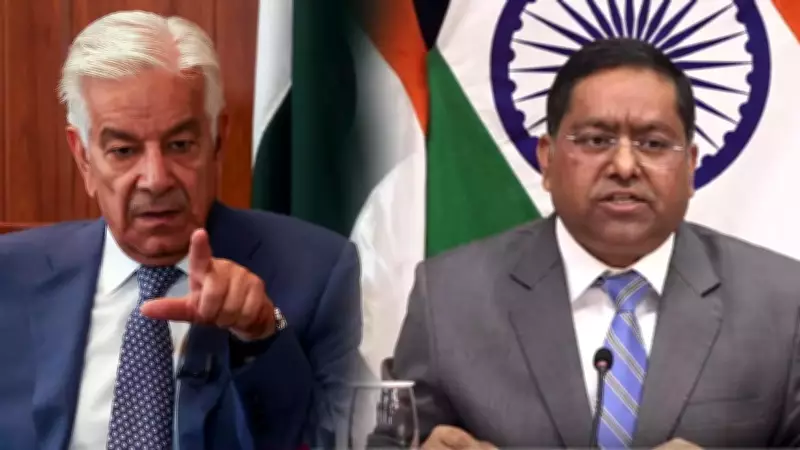
India Delivers Stern Rebuttal to Pakistan's Proxy War Claims
In a sharp diplomatic exchange, India has issued a firm and measured response to Pakistan's recent allegations of a proxy war involving Afghanistan. The controversy erupted after Pakistan's Defence Minister, Khawaja Asif, publicly accused India and Afghanistan of being "on the same page" in targeting Pakistan through coordinated actions.
MEA's Calm Yet Unyielding Stance
The Ministry of External Affairs (MEA) of India responded with clarity, stating that the fundamental issue remains cross-border terrorism. New Delhi categorically dismissed the allegations as diversionary tactics, suggesting they are an attempt to shift focus away from Pakistan's escalating internal challenges and governance crises.
"The core problem persists: terrorism emanating from across our borders," an MEA spokesperson emphasized. "Instead of engaging in blame games, all nations must address the root causes of regional instability."

Context of Pakistan's Internal Turmoil
The Indian response comes against a backdrop of rising militant violence within Pakistan, which has seen a surge in terrorist incidents and security operations. Analysts note that Pakistan's internal instability has become a significant concern, with economic pressures and political fragmentation compounding security threats.
Interestingly, Defence Minister Khawaja Asif's own recent admissions about past policy missteps by Pakistan have added a layer of complexity to the discourse. His acknowledgment of historical errors in handling militant groups has been viewed by some as an indirect validation of India's long-standing concerns regarding state-sponsored terrorism.
India's Consistent Position on Regional Peace
India maintains that terrorist networks operating with impunity across borders are the primary source of friction in South Asia. The government reiterated that sustainable peace can only be achieved by confronting terrorism at its origin, rather than through accusatory rhetoric.
"Blame games will not resolve the deep-seated issues plaguing our region," the MEA statement concluded. "A sincere commitment to dismantling terror infrastructures is imperative for any meaningful progress toward stability."
Broader Implications for Diplomacy
This exchange underscores the ongoing tensions between the nuclear-armed neighbors, even as both nations navigate complex geopolitical shifts. India's response, while firm, avoided escalatory language, reflecting a strategic preference for diplomatic calm amid provocations.
The episode also highlights the intricate dynamics involving Afghanistan, where India has maintained developmental partnerships, often viewed with suspicion by Pakistan. As regional alliances evolve, such accusations and rebuttals are likely to continue shaping the security dialogue in South Asia.
Ultimately, India's message remains unambiguous: addressing cross-border terrorism is non-negotiable for any prospects of lasting peace, and diversionary narratives will not alter this fundamental principle.