India Firmly Rejects USCIRF Report on Religious Freedom as Biased and Motivated
The Indian government has issued a strong and categorical rejection of the latest report from the US Commission on International Religious Freedom (USCIRF), which alleged a deterioration of religious freedom in India and sought its designation as a "country of particular concern." The government labeled the report as "motivated and biased," asserting that it presents a distorted and selective picture of the nation.
Government Response Highlights Hypocrisy and Selective Criticism
In its official response, the government urged USCIRF to reflect on incidents of vandalism and attacks on Hindu temples in the United States, rather than persisting with what it called selective criticism of India. The statement emphasized that growing intolerance and intimidation of members of the Indian diaspora in the US merit serious attention, pointing to a perceived double standard in the commission's approach.
The report had also called for sanctions on Indian entities, including the Research & Analysis Wing (R&AW) and the Rashtriya Swayamsevak Sangh (RSS), by freezing their assets or barring entry into the US due to alleged responsibility for severe violations of religious freedom. The government dismissed these recommendations as unfounded and based on questionable sources.

MEA Spokesperson Criticizes USCIRF's Credibility and Methodology
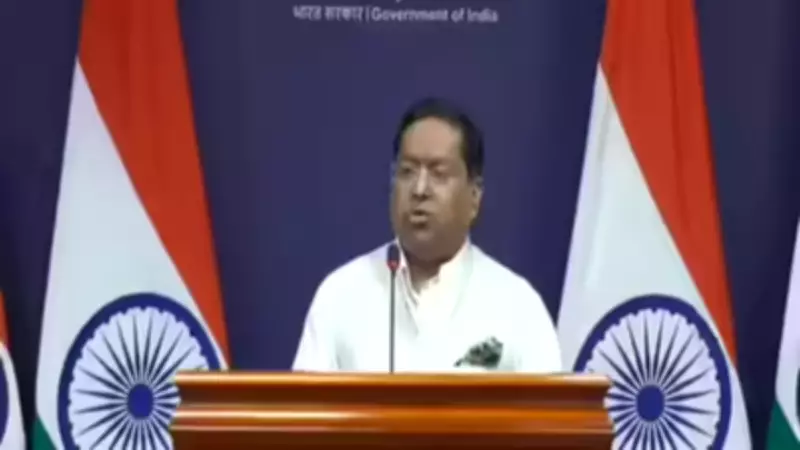
Ministry of External Affairs spokesperson Randhir Jaiswal stated, "For several years now, USCIRF has persisted in presenting a distorted and selective picture of India, relying on questionable sources and ideological narratives rather than objective facts. Such repeated misrepresentations only undermine the credibility of the commission itself." This criticism underscores India's stance that the report lacks factual basis and is driven by ideological biases.
The USCIRF report claimed that in 2025, religious freedom conditions in India continued to deteriorate, citing the introduction and enforcement of new legislation targeting religious minority communities and their houses of worship. However, the Indian government countered this by highlighting its commitment to secularism and the rule of law, arguing that such allegations ignore the country's diverse and pluralistic society.
Background on USCIRF and Its Role in US Policy
USCIRF is an independent, bipartisan US federal government agency tasked with monitoring religious freedom globally. It makes policy recommendations to the US president, secretary of state, and Congress, and tracks the implementation of these recommendations. Despite its official status, India's rejection suggests a growing rift in how religious freedom issues are perceived between the two nations.
The government's response also pointed to what it sees as a pattern of selective targeting, noting that similar incidents in other countries are not scrutinized with the same intensity. This stance reflects broader diplomatic tensions and India's assertion of its sovereignty in internal matters.
In summary, India's firm rejection of the USCIRF report highlights a deepening disagreement over religious freedom assessments, with the government accusing the commission of bias and calling for a more balanced approach that considers issues within the United States as well.