

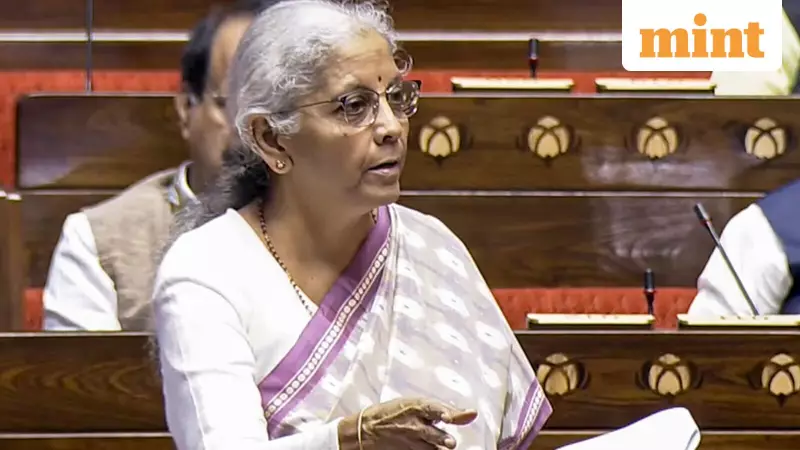
Finance Minister Nirmala Sitharaman held high-level talks with a visiting Russian delegation on Thursday, setting the stage for the crucial annual bilateral summit. The discussions focused on strengthening economic ties, with specific attention on investment opportunities and resolving banking and financial matters between the two nations.
High-Level Talks Set Agenda for Summit
The meeting was led by Russian First Deputy Prime Minister Denis Manturov, who is part of the delegation accompanying President Vladimir Putin to New Delhi. According to an official statement from Sitharaman's office, both sides expressed strong expectations for positive outcomes from the 23rd India-Russia annual summit scheduled for December 5.
Manturov's delegation included key Russian economic figures: Minister of Economic Development Reshetnikov Maxim, Finance Minister Siluanov Anton, and Central Bank Chairman Nabiullina Elvira. The Indian side was represented by officials from the Department of Economic Affairs, Department of Financial Services, the Reserve Bank of India (RBI), and the Ministry of External Affairs.

A significant point of discussion was India's upcoming leadership role in the BRICS grouping. The Russian First Deputy Prime Minister extended "strong support" to India's forthcoming chairship of BRICS, highlighting the strategic alignment between the two countries on multilateral platforms.
Customs Agreement Signed for Smoother Trade
In a parallel development aimed at boosting trade efficiency, the Central Board of Indirect Taxes and Customs (CBIC) signed a pivotal agreement with Russia's Federal Customs Service (FCS). The deal, inked by CBIC Chairman Vivek Chaturvedi and Russia's Deputy Head of FCS Tatiana Merkushova, focuses on sharing pre-arrival information for goods and vehicles.
This system allows customs authorities to assess risks and process documentation in advance, leading to significantly faster and more secure border clearance. The CBIC stated that the pact will "strengthen trade facilitation while enhancing security, transparency, and overall efficiency in cross-border movements."
Summit Amidst Geopolitical Balancing Act
The high-profile visit occurs against a complex geopolitical backdrop. India continues to maintain its historically close ties with Russia, particularly in defense and energy, while simultaneously navigating pressure from Western allies. The United States has urged India to reduce its oil imports from Russia and, since August, has imposed an additional 25% tariff on certain Indian exports.
Despite these pressures, India is actively negotiating a trade deal with the US but remains committed to its strategic partnership with Moscow. Prime Minister Narendra Modi personally welcomed President Putin at the airport, calling the India-Russia friendship "time-tested" and one that has greatly benefited both peoples. Modi expressed his anticipation for their interactions during the summit.
The meetings underscore India's diplomatic strategy of pursuing mutually beneficial relationships with all major powers, a stance recently mirrored in its engagement with China during the Shanghai Cooperation Organization summit, where differences were acknowledged but framed within a context of partnership.






