

India Faces Uphill Battle in Forging Unified BRICS Stance on West Asia Conflict
India has openly acknowledged the significant hurdles in achieving a common BRICS position regarding the ongoing West Asia conflict, attributing the impasse to differing views among member nations. As the current chair of the influential bloc, New Delhi is actively engaged in efforts to build consensus, despite the complexities introduced by the direct involvement of some BRICS countries in the regional tensions.
Direct Involvement of Members Complicates Consensus Efforts
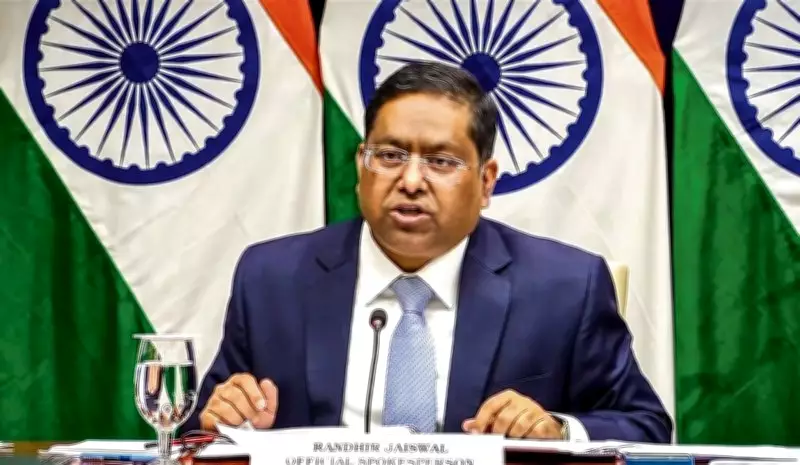
Ministry of External Affairs Spokesperson Randhir Jaiswal highlighted that some BRICS members are directly involved in the current situation in West Asia, which has severely impacted the grouping's ability to formulate a unified stance. While not naming specific countries, this statement points to the intricate dynamics within BRICS, especially following its recent expansion.
The bloc, originally comprising Brazil, Russia, India, China, and South Africa, has grown to include Egypt, Ethiopia, Iran, and the United Arab Emirates as of 2024, with Indonesia joining in 2025. This expansion has brought together 11 major emerging economies, representing approximately 49.5% of the global population, 40% of global GDP, and 26% of global trade, underscoring its growing influence on the world stage.

Recent Tensions and India's Diplomatic Maneuvers
The challenge of finding common ground has been exacerbated by recent events, including Iran's counter-offensive against the UAE and other Gulf nations. This action was triggered by the February 28 US-Israel strikes on Iranian targets, creating disquiet within the BRICS framework. In response, India has been leveraging its role as chair to facilitate discussions through the Sherpa channel, with the latest virtual meeting held on March 12.
Jaiswal emphasized, "We are trying our best to develop a position, but because of differing positions, it has been difficult." He added that India's leadership is engaged with member countries to navigate these differences. The issue was also discussed in a phone conversation between External Affairs Minister S. Jaishankar and his Iranian counterpart, Seyed Abbas Araghchi, on Thursday night, highlighting New Delhi's proactive diplomatic outreach.
Ongoing Efforts and Future Prospects
Despite the obstacles, India remains committed to fostering dialogue among BRICS nations. Jaiswal stated, "We continue to remain engaged with BRICS member-nations so that we can arrive at a position on this conflict." This persistent engagement reflects India's strategic approach to balancing diverse interests within the bloc while advocating for stability in West Asia.
The inability to reach a unified BRICS position underscores the broader geopolitical complexities facing emerging economies as they navigate conflicts involving member states. As India continues its chairmanship, the world watches closely to see if consensus can be forged amid such divergent perspectives.






