India's Foreign Secretary Signs Condolence Book for Iran's Khamenei Amid Escalating War Tensions
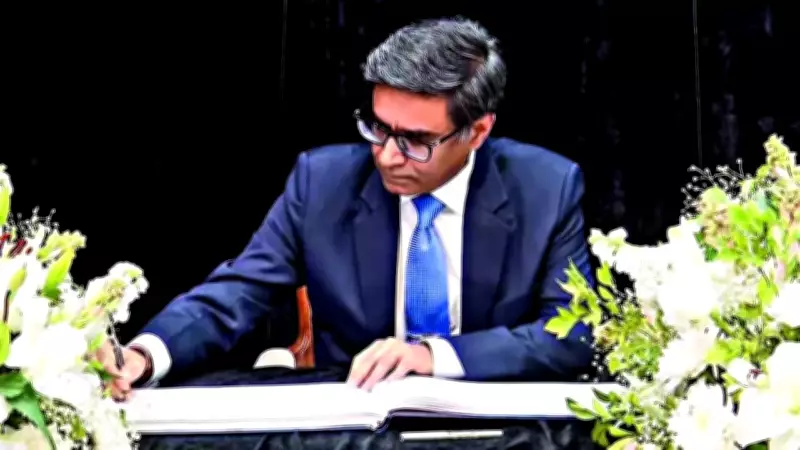
Foreign Secretary Vikram Misri signed the book of condolence at the Iranian embassy in New Delhi on Thursday, expressing sympathy on behalf of the Indian government and people following the killing of Iran's Supreme Leader Ali Khamenei on February 28. This diplomatic gesture comes amid intense criticism over India's initial silence regarding the incident, which occurred during the volatile US-Israel-Iran conflict.
Diplomatic Moves Amid War Updates
The signing follows External Affairs Minister S. Jaishankar's teleconference with his Iranian counterpart Abbas Araghchi, details of which were shared on social media platform X without elaboration. Notably, Araghchi emphasized that the Iranian warship IRIS Dena, destroyed by a US submarine attack, was officially a guest of the Indian Navy, adding complexity to bilateral relations.
High-level contact between India and Iran is anticipated on Friday, with Tehran seeking a meeting for visiting Deputy Foreign Minister Saeed Khatibzadeh. Sources indicate that Foreign Secretary Misri may meet the minister, who is currently in India for the Raisina Dialogue, marking the first significant interaction since the conflict escalated.

Condolence Protocol and Historical Context
After signing the condolence book, Misri held a brief meeting with Iranian Ambassador Mohammad Fathali. The condolence book was opened earlier in the day, with Russian Ambassador Denis Alipov and Pakistani Charge d’Affaires Saad Ahmad Warraich among the first to sign. In his message, Misri stated, "We pray for peace for the departed soul," conveying India's formal condolences.
However, this response contrasts with India's actions in 2024 following the death of then Iranian President Ebrahim Raisi, when Jaishankar personally visited the embassy to sign the condolence book and India declared a day of national mourning. The delay in offering condolences for Khamenei, killed days earlier, has drawn opposition criticism, highlighting diplomatic sensitivities.
Complex Bilateral Relations
India has historically maintained mixed feelings toward Khamenei, who supported shared regional interests such as connectivity through the Chabahar port but also provoked India with controversial statements on Jammu & Kashmir and Muslims in India. Khamenei met Prime Minister Narendra Modi during Modi's 2016 visit to Tehran, the first bilateral trip by an Indian PM to Iran in 15 years, described by the Indian foreign ministry as a rare honor.
Iran's Stance on Regional Security and India
Iran has denied indiscriminately attacking Gulf countries, home to nearly 10 million Indians, with Ambassador Fathali clarifying, "We told all our neighbours we are attacking US bases from which they target us." He emphasized Iran's desire to strengthen historical ties with India, stating, "But in this case, all governments and all people are being put to the test."
Iranian authorities assert their commitment to robust relations with India, insisting that third countries should not influence the bilateral dynamic. They maintain that international law must be applied uniformly, without cherry-picking.
Maritime Security and Economic Implications
Regarding safe passage for Indian tankers through the Strait of Hormuz, Iran remains non-committal, indicating that actions will depend on specific conditions. Tehran argues that it officially communicated to neighbors that US bases would be legitimate targets if Iran faced attacks, and blames insurance companies and others avoiding the conflict for the strait's closure, impacting global trade routes.
This diplomatic engagement underscores the delicate balance India must strike in navigating international conflicts while preserving strategic partnerships in a volatile geopolitical landscape.